
Author: admin
-

How do you ensure two-way communication during change?
Two-way communication fails when leaders broadcast updates but don’t close the loop. This guide shows how to build predictable feedback loops, choose a simple channel mix, and equip managers with consistent prompts, FAQs, and escalation paths. You’ll learn how to reduce uncertainty, boost employee engagement, and protect company culture during workplace transformation—plus which change communication…
-
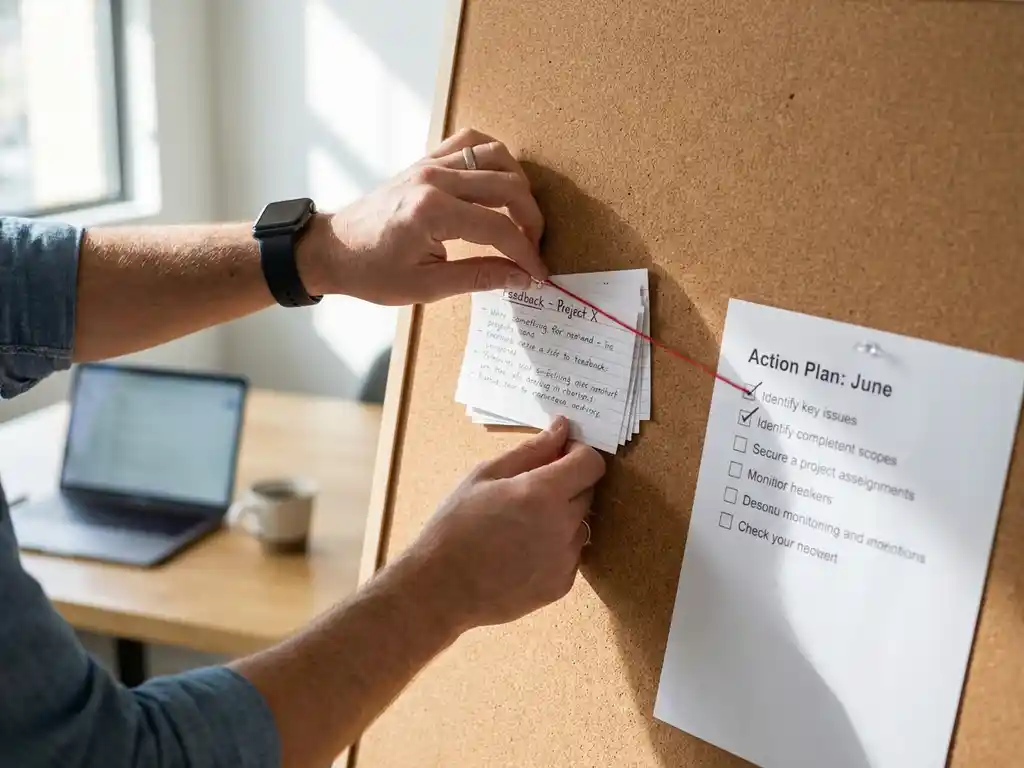
How do you turn employee insights into action quickly?
Employee feedback only matters when it turns into clear decisions and visible change. This guide shows how to translate insights into action in 30 days: define what’s actionable, prioritize by impact/reach/effort, assign a single owner, and run weekly check-ins. You’ll also get a simple communication loop to build trust and strengthen employee engagement—plus what to…
-

How do you build psychological safety through internal communication?
Psychological safety grows when internal communication makes it safe to speak up, ask for help, and share bad news without blame. This guide breaks down what it is, the communication practices that build trust, and leader phrases that invite dissent. You’ll also learn simple ways to measure progress—pulse questions, participation signals, and feedback-loop follow-through—especially during…
-

How do you use workshops to strengthen company culture?
Company culture doesn’t change through slides—it changes through shared practice. This guide explains how culture-building workshops turn values into daily behaviors, build psychological safety, and boost employee engagement during onboarding, growth, or reorgs. You’ll learn how to design scenarios, facilitate inclusive participation, and measure real behavior change with follow-ups and meeting signals. See what makes…
-

How do you build a shared language across teams?
Misunderstandings multiply when teams use the same words to mean different things—especially during cultural change. This guide shows how to build a shared language across teams by choosing 5–10 power terms, defining them with behaviors and examples, and reinforcing them through meeting prompts, decision templates, and manager coaching. You’ll learn practical change communication tools that…
-

What is the best cadence for change updates?
How often should you share change updates without overwhelming people? This guide recommends a simple cadence: a predictable weekly update, quick micro updates within 24–48 hours of key milestones, and a monthly leadership recap for context. Learn what “cadence” means, how to match frequency to uncertainty and impact, which channels fit each layer, and how…
-

How do you run a culture transformation workshop for hybrid teams?
Hybrid work can magnify silos, uneven engagement, and “room-first” meetings. This guide shows how to run a culture transformation workshop for hybrid teams—from diagnosing today’s culture to co-creating norms, meeting rules, and measurable “We will” behaviors. You’ll get a proven 90–150 minute agenda, high-impact activities, and change communication tools like decision logs and async update…
-

What is the difference between communication strategy and communication plan?
Confused about communication strategy vs. communication plan? This guide explains the key difference—strategy sets the “why/what,” while the plan defines the “how/when/who.” Learn when you need each during cultural change, workplace transformation, and internal updates, plus a practical step-by-step process to build a clear narrative, message pillars, channels, owners, and feedback loops. Keep reading to…
-

How do you handle resistance in a culture change program?
Resistance in a culture change program isn’t defiance—it’s data. This guide shows leaders how to spot overt, covert, and system resistance, diagnose the real barrier fast, and reduce pushback with clear change communication, manager alignment, and safe practice loops. Learn step-by-step tactics, tools, and talking points that turn values into observable behaviors—and build buy-in that…
-

How do you keep engagement high in virtual company events?
Virtual company events don’t fail because people won’t show up—they fail because they’re designed for attendance, not participation. This guide shows how to boost employee engagement with a tight agenda, interaction every 5–8 minutes, and low-friction activities like polls, chat waterfalls, and breakout triads. You’ll also learn how to prime participation before the event and…
-

How do you create a change communication toolkit for managers?
Managers are the frontline translators of strategy during workplace transformation—yet many are left to improvise. This guide shows how to build a change communication toolkit that keeps messages clear and consistent: a one-page change story, message architecture, FAQs, meeting agendas, 1:1 prompts, channel templates, and a feedback loop. Learn practical change communication tools that reduce…
-

Can storytelling replace traditional change communication tools?
Can stories do the heavy lifting in workplace transformation—or do you still need emails, intranet hubs, FAQs, and town halls? This post breaks down what storytelling in change communication does best (meaning, trust, momentum) versus where traditional change communication tools win (clarity, compliance, consistency). You’ll also get a practical workflow for pairing a core change…
-

What are the most common change management communication mistakes?
Change initiatives fail fast when communication is vague, late, or one-way. This post breaks down the most common change management communication mistakes—unclear purpose, inconsistent messaging, ignoring managers, and skipping feedback loops—and shows how to build a clear internal communication strategy with repeatable messages, the right cadence, and simple measurement. See what to say, when to…
-

How do you tailor organizational culture training to different departments?
One-size-fits-all culture workshops rarely change behavior. This guide shows how to tailor organizational culture training for sales, support, engineering, and operations while keeping one shared set of values. You’ll learn how to assess each team’s workflows and friction points, build department-specific scenarios and practice routines, and measure results with simple behavior checklists, pulse questions, and…
-

How do you align leadership on one change narrative?
Mixed messages derail change fast. This guide shows how to align leadership on one clear change narrative—co-create the why/what/how, build a message map with proof points, set boundaries, and rehearse tough Q&A. You’ll learn how to keep leaders consistent across channels while still sounding authentic, boosting employee understanding and engagement. See the step-by-step process and…
-

What skills are covered in management training?
Management training builds the core skills managers need to lead teams through change: leadership fundamentals, clear communication, people management, conflict resolution, and day-to-day execution. This guide breaks down what new and experienced managers typically learn—delegation, coaching, feedback, meeting leadership, change communication tools, prioritization, and culture building—so you can choose training that improves employee engagement and…
-

What are the best employee engagement activities for large companies?
Looking for employee engagement activities that actually work at scale? This guide breaks down proven, inclusive formats for large companies—interactive town halls, hybrid culture-building workshops, cross-functional sessions, and storytelling-based change communication. You’ll also get practical selection criteria for different departments and simple ways to measure impact with quick pulses and behavioral signals. If your workforce…
-

How do you choose the right management training program?
Choosing a management training program is easiest when you start with real manager moments—not a generic curriculum. This guide shows how to run a quick needs assessment, compare formats (workshop, cohort, coaching, blended), and vet providers for customization, practice, and reinforcement. You’ll also learn how to measure behavior change in 30–90 days using engagement and…
-

How do you prevent mixed messages during change?
Mixed messages can derail workplace transformation—especially when leaders, managers, and channels tell different versions of “what’s changing.” This guide shows how to align on one clear change story, assign message ownership, and standardize language across email, meetings, and chat. Get practical tools like manager toolkits, a single source of truth, and rumor-handling scripts to protect…
-

How do you build a communication strategy for organizational change?
Struggling to keep people aligned during transformation? This guide shows how to build a communication strategy for organizational change: craft a clear change story, map stakeholders, tailor “what changes for me” messages, and choose the right channels and cadence. Learn how to enable managers, reduce rumors, and measure understanding, sentiment, and adoption—so employees know what’s…
-

What are the risks of humor in business communication?
Humor can make workplace messages feel human—but it can also backfire. This guide breaks down the biggest risks of humor in business communication: misinterpretation across cultures and channels, unintended offense, credibility loss during change, and HR/legal exposure when jokes touch identity or power dynamics. You’ll get a practical checklist for using inclusive, purpose-driven humor that…
-

What is communication strategy?
A communication strategy is the documented logic behind how you communicate to reach a business goal—who needs what, when, and through which channels. This guide breaks down what to include (goals, audiences, narrative, cadence, ownership, feedback loops, measurement), how to build it step by step, and how it differs from a communication plan. If you’re…
-

How do you support frontline managers with change communication?
Frontline managers are the make-or-break link in workplace transformation—but they’re often asked to deliver change messages without the why, the tools, or the confidence. This guide shows how to support manager-led change communication with a clear message map, a practical change communication toolkit, and repeatable conversation routines for team meetings and one-on-ones. You’ll also learn…
-

How do you assess team culture quickly?
Need a fast read on team culture without a full survey? This guide shows how to assess culture in 30–60 minutes using three signals: what people say matters, what they do under pressure, and what the environment rewards. You’ll get practical culture questions, meeting observation cues, and a 10‑minute pulse check to gauge trust, decision-making,…
-

How do you use humor without undermining serious messages?
Humor can help serious messages land—if it supports the point instead of stealing it. This guide shows leaders how to keep the core message upfront, use inclusive low-risk humor, and avoid common backfires like sarcasm, inside jokes, or joking before acknowledging impact. You’ll get a simple structure and a pre-flight checklist to test lines safely,…
-

How do you lead workplace transformation without burnout?
Workplace transformation can drain teams when priorities stay fuzzy, updates multiply, and urgency never stops. This guide shows how to lead change sustainably by focusing on 2–3 high-impact outcomes, creating a “not doing” list, setting communication boundaries, and pacing delivery in small, testable waves. You’ll learn practical habits—clear decision rights, feedback loops, and meeting discipline—that…
-

What is the difference between employee engagement and company culture?
Employee engagement is how motivated and committed people feel day to day; company culture is the shared norms and behaviors that shape how work gets done. This guide breaks down the difference, shows how culture and engagement reinforce each other, and shares practical levers—clear priorities, manager communication, and feedback loops—to lift engagement during change. Learn…
-

What is workplace transformation?
Workplace transformation is more than a new tool or hybrid policy—it’s a coordinated shift in people, processes, culture, and communication so work runs better. This guide explains why organizations invest, the key pillars (leadership, internal communication strategy, employee engagement), and a step-by-step plan to implement change and measure adoption. See what makes transformation stick—and what…
-

When should you run a company culture workshop?
Wondering if it’s the right time for a company culture workshop? This guide shows the clearest signs—misalignment, change fatigue, recurring team friction—and where to place a culture reset in your change process. Learn how to set a business goal, involve the right people, and create observable behaviors plus a practical internal communication strategy you can…
-

How do you reduce information overload in internal communications?
Drowning in emails, chats, and “urgent” updates? This guide shows how to reduce information overload in internal communications without losing critical messages. Learn a simple hierarchy (critical/important/optional), tighter audience targeting, one source of truth, and channel rules that restore trust. Discover practical metrics to prove clarity is improving—and why the goal isn’t silence, it’s signal.
-

How do you design events that drive real behavior change?
Most events inspire for a day—then nothing changes. This guide shows how to design events that create real behavior change at work by defining 1–2 observable behaviors, building repeated practice into the agenda, and reinforcing habits with cues and accountability after the event. Learn interactive formats (workshops, simulations, role play), ways to measure adoption, and…
-

What are practical ways to fight communication fatigue at work?
Drowning in pings, threads, and status meetings? Communication fatigue builds when every channel feels urgent and no one knows what belongs where. This guide shows practical ways to reduce message overload with clear channel norms, smarter meeting habits, and simple async workflows that create a single source of truth. Learn how to protect focus while…
-
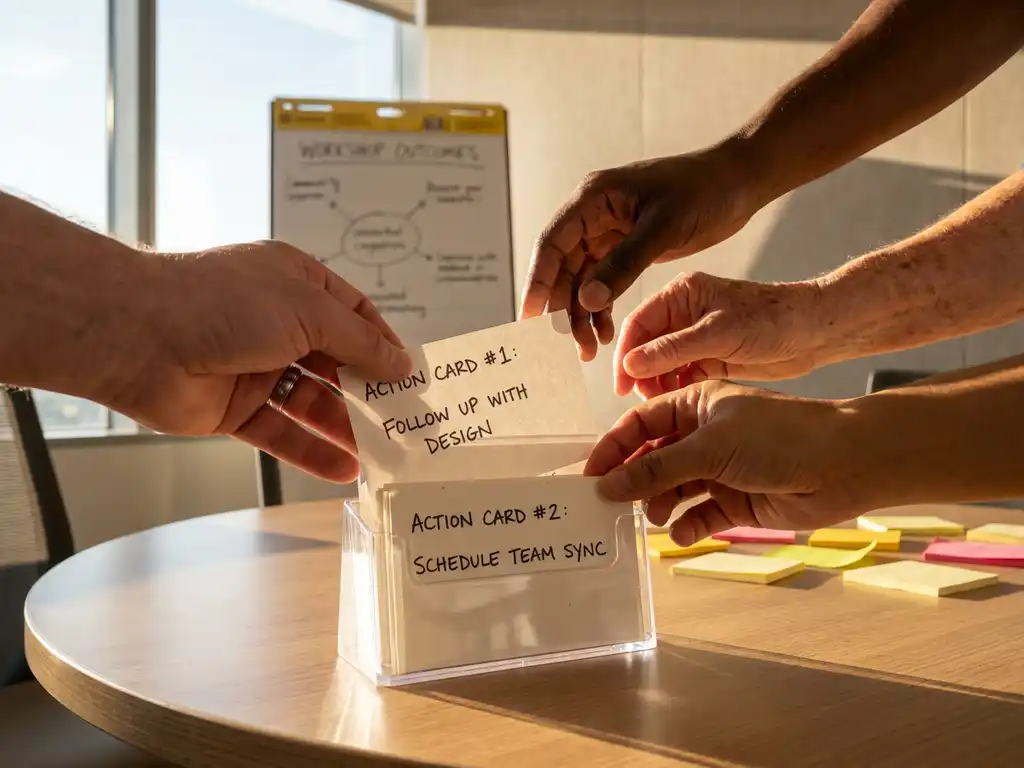
How do you follow up after a culture workshop to sustain momentum?
Culture workshops spark energy—then inboxes kill it. Learn how to follow up within 48 hours, turn insights into a one-page action plan with clear owners, and reinforce new behaviors through meetings, 1:1s, and recognition. You’ll also track simple leading indicators like closed-loop rates and decision clarity to see if culture change is sticking. Ready to…