
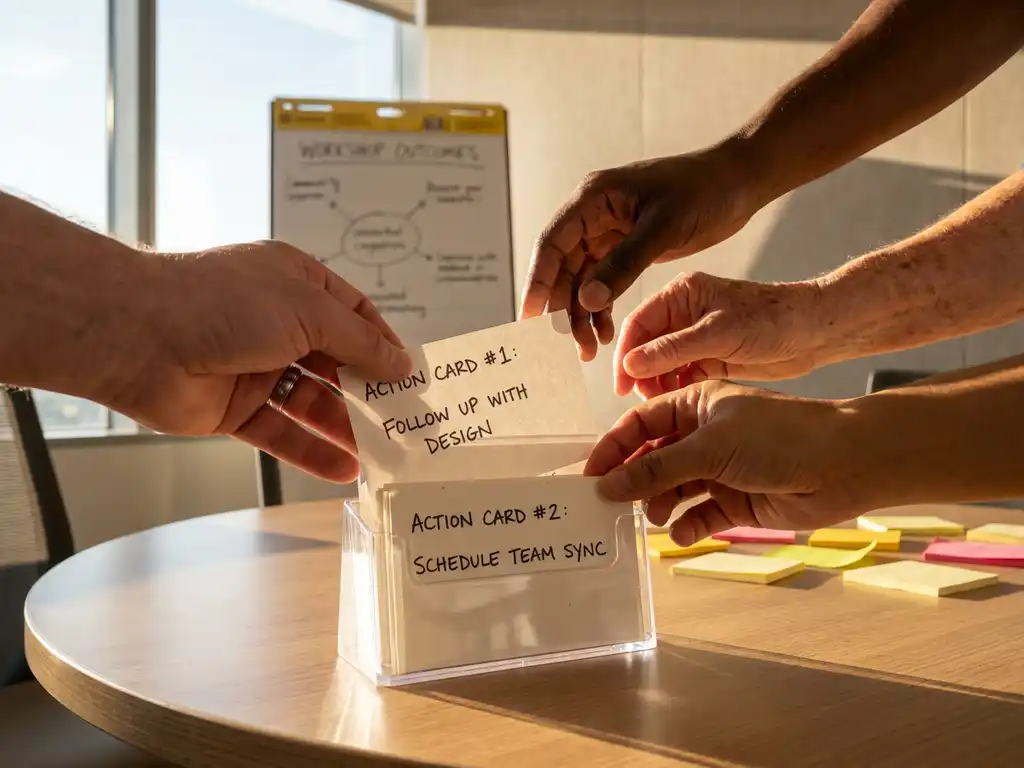
Follow up after a culture workshop by locking in decisions within 48 hours, translating insights into a short action plan with clear owners, and reinforcing new behaviors through everyday management routines. Momentum lasts when people see quick wins, consistent leadership signals, and simple change communication tools they can use immediately.
This approach works best for teams navigating cultural change, workplace transformation, or a broader cultural change program where employee engagement can fade fast after an inspiring session. The goal is to turn a company culture workshop into repeatable habits, not a one-time event.
The questions below break down exactly what to do, how to lead through change, and how to measure whether culture building is actually sticking.
What should you do in the first 48 hours after a culture workshop?
In the first 48 hours after a company culture workshop, capture the key decisions, confirm ownership, and communicate the next steps in one clear message. Fast follow-up prevents communication fatigue, reduces ambiguity, and signals that culture building is real work, not a poster. Aim for clarity, speed, and visible commitment.
- Send a same-day recap: 5 to 8 bullets covering what the team agreed on, what changes, and what stays the same.
- Name 1 to 3 priorities: Too many initiatives kill momentum and employee engagement.
- Assign owners and deadlines: Every action needs one accountable person and a first check-in date.
- Document behavior examples: Write “what it looks like” in meetings, handoffs, and decision-making.
- Schedule the next two touchpoints: A 15-minute check-in next week and a 45-minute review in 30 days.
Keep the tone practical. People leave workshops energized, then return to full inboxes and urgent tasks. Your job in these first two days is to make the new team culture easy to remember and easier to act on.
How do you turn workshop insights into a practical action plan?
Turn workshop insights into a practical action plan by converting themes into specific behaviors, then mapping each behavior to one process change, one communication habit, and one metric. A useful plan fits on one page, supports your internal communication strategy, and makes culture transformation measurable through daily work.
- Cluster insights into 3 themes: For example, trust, ownership, and feedback. Avoid ten-theme lists.
- Define behaviors per theme: Write observable actions like “raise risks early” or “close loops within 24 hours.”
- Choose one “system” lever: Update meeting agendas, decision logs, onboarding, or performance check-ins so culture building has a home.
- Pick change communication tools: A monthly narrative update, a simple FAQ, and a manager talk track.
- Set a 30 60 90 day cadence: 30 days for quick wins, 60 for adoption, 90 for reinforcement.
If you are running change management training or management training alongside culture work, align the plan to the same language leaders use elsewhere. Consistency reduces confusion and helps people connect the culture transformation workshop to real priorities.
How can leaders and managers reinforce new culture behaviors day-to-day?
Leaders and managers reinforce new culture behaviors by modeling them publicly, coaching them in the moment, and building them into routines like meetings, one-on-ones, and recognition. Day-to-day reinforcement matters more than big speeches because team culture is shaped by repeated signals about what gets rewarded, tolerated, and corrected.
- Start meetings with one behavior cue: “Today we will challenge ideas, not people” or “We will decide and document.”
- Use micro coaching: When someone demonstrates the new behavior, name it and why it matters.
- Make recognition specific: Praise the action, the impact, and the link to company culture.
- Correct drift fast: Address old habits in the room, respectfully and immediately.
- Tell short stories: Storytelling in change helps people remember what “good” looks like under pressure.
Humor in business can help here when used carefully. A light, business-friendly moment can lower defensiveness and make feedback easier to hear, especially during workplace transformation. The rule is simple: laugh at the situation, not at people, and always connect the moment back to the desired behavior.
How do you measure whether culture momentum is actually improving?
Measure culture momentum by tracking a small set of leading indicators that show behavior change, not just sentiment. Combine pulse feedback with observable operational signals like decision speed, cross-team collaboration, and meeting quality. When measurement is simple and frequent, it supports creative change management without creating extra bureaucracy.
Leading indicators you can track weekly
- Behavior check counts: How often managers referenced the new behaviors in one-on-ones or team meetings.
- Closed loop rate: Percentage of action items that get owners, deadlines, and follow-through.
- Cross-team touchpoints: Number of proactive handoffs or joint problem-solving moments across silos.
- Decision clarity: Fewer “who decided this” follow-ups and clearer ownership.
Lagging indicators you can review monthly or quarterly
- Pulse survey trends: Short questions tied to the specific culture behaviors, not generic engagement.
- Retention and internal mobility signals: Look for directional movement, not perfect attribution.
- Quality of feedback: More specific, actionable feedback suggests psychological safety is improving.
To avoid the common trap where leaders think communication is clear but employees disagree, pair every metric with a short qualitative prompt: “What is one moment this week where the new culture showed up” and “What got in the way.” That keeps your communication strategy grounded in reality.
Hoe Boom for Business helpt met momentum na een cultuurworkshop?
We help sustain momentum after a culture workshop by turning culture building into repeatable communication and leadership habits, supported by high-energy facilitation and practical follow-through. Our approach blends organizational culture training with business-friendly humor so messages land, stick, and stay usable for managers leading through change in 2026 and beyond.
- Follow-up formats that people actually read: crisp recaps, talk tracks, and internal communication strategy assets
- Manager reinforcement support: employee communication training and management training-style tools for day-to-day coaching
- Creative change management sessions: interactive refreshers that reconnect teams to the “why” without repeating the whole workshop
- Story-driven alignment: storytelling in change that makes the new team culture easy to remember and repeat
If you want momentum that lasts, explore our workshops or contact us directly via Boom For Business to design a follow-up plan that fits your culture transformation goals.
Frequently Asked Questions
Who should own the culture action plan after the workshop—HR, leadership, or managers?
Assign one executive sponsor to remove blockers, one program owner (often HR/People Ops or a transformation lead) to run the cadence, and managers to own day-to-day reinforcement. Keep ownership explicit: one name per action item, plus a backup, so progress doesn’t stall when priorities shift.
What if the team can’t agree on the “right” behaviors to prioritize?
Timebox the debate and use a simple selection rule: pick behaviors that (1) reduce friction in current work, (2) are observable in meetings and handoffs, and (3) leaders are willing to model immediately. If needed, run a two-week pilot with two behaviors, then keep what improves outcomes and drop what doesn’t.
How do you handle skeptics or workshop backlash without losing momentum?
Acknowledge concerns directly, then invite specifics: “What would you need to see in the next 30 days to believe this is real?” Convert feedback into one or two visible changes (e.g., decision logging, faster follow-through). Avoid over-explaining—show proof through consistent actions and quick wins.
How do you keep culture follow-up from turning into extra meetings and bureaucracy?
Embed it into existing routines. Add a 3-minute behavior check to regular team meetings, use a single shared decision/action log, and keep updates to one page. If a ritual doesn’t change behavior within 30 days, simplify or remove it.
What should remote or hybrid teams do differently after a culture workshop?
Make behaviors visible in digital work: document decisions in a shared space, define response-time norms, and use meeting roles (facilitator, timekeeper, note-taker) to reinforce habits. Increase “asynchronous clarity” with short written recaps and fewer, better-structured live meetings.
How do you align culture behaviors with performance reviews and incentives without creating fear?
Start with coaching before consequences. Add the behaviors as “how we work” expectations, use examples in 1:1s, and recognize progress publicly. Only after the behaviors are well-defined and supported should they influence formal evaluations—and even then, focus on patterns over single incidents.
What’s a practical 30-day checklist to make sure the workshop sticks?
Within 30 days: publish the one-page plan, run the first weekly check-in, capture at least two quick wins, collect one pulse prompt (“what helped/what blocked”), and review the action log for follow-through. If any item is missing, fix the system (owners, cadence, visibility) before adding new initiatives.
Related Articles
- What are the best culture building practices for hybrid teams?
- What are signs of a toxic company culture?
- How do you use storytelling to help new employees understand company culture?
- 7 event moderation habits that make every speaker feel supported on stage
- How do you plan team building activities for diverse teams?