Author: Isabel
-

What is an employee engagement workshop that goes beyond superficial fun?
Not all “engagement” is created equal. A meaningful employee engagement workshop goes beyond games to build repeatable behaviors—trust, clear communication, psychological safety, and shared ownership. This post explains what separates superficial fun from lasting culture change, what to include (practice, debriefs, follow-through), and how to choose the right format for hybrid, siloed, or change-fatigued teams.…
-

What makes brainstorming sessions ineffective?
Why do brainstorming sessions stall, drift, or end with “no next steps”? This guide breaks down the most common brainstorming mistakes—vague goals, groupthink in brainstorming, early criticism, and uneven participation—and shows how strong brainstorming facilitation restores clarity and psychological safety. You’ll learn a simple, repeatable flow: sharpen the prompt, start with silent ideation, cluster themes,…
-

Why does a brainstorming session fail to produce anything new?
If your brainstorming sessions keep recycling the same “safe” ideas, it’s rarely a creativity problem—it’s a design problem. This post explains why teams default to speed, agreement, and the loudest voice, then converge too early for novelty to emerge. You’ll learn how groupthink, vague prompts, premature evaluation, and unequal airtime quietly kill originality, plus a…
-

How do you recognise signs of manager overload before it escalates?
Manager overload rarely looks like one bad day—it’s a two-week pattern of slipping priorities, slower decisions, shorter communication, and less coaching. This post shows the earliest warning signs, how to assess them objectively (inputs, outputs, recovery), and what to change fast: stop-doing lists, clearer decision rights, smarter delegation, and calmer team norms. Learn what to…
-

How do you prevent managers from becoming overloaded with communication tasks?
Managers get overloaded when they become the default router for every update across email, chat, meetings, and ad hoc requests. This post shows how to reduce interruptions without reducing clarity: map channels to a single purpose, set response expectations, assign DRI ownership, use update templates and decision records, and replace status meetings with predictable async…
-

How do you create a culture in which everyone feels comfortable speaking up?
A speak-up culture isn’t created by telling people they can share feedback—it’s built through psychological safety and everyday behaviors. This guide breaks down why employee voice disappears, how to invite input early, respond with curiosity, and protect people from blame. You’ll get practical meeting habits (write-first, round-robin, clear decision rights) plus ways to pair high…
-

What can an organisation do to reduce employees’ fear of speaking up?
Employees stay silent when they expect retaliation, status loss, or “nothing will change.” This guide shows how to reduce fear of speaking up by building psychological safety through consistent leader responses, clear anti-retaliation norms, and practical systems—meeting routines, anonymous and named channels, escalation paths, and 48-hour response SLAs. You’ll also learn how to handle mistakes…
-

Which exercises help employees tell a better brand story?
When attention is scarce, employees need a brand story they can repeat clearly in meetings, emails, and customer conversations. This post shares practical employee storytelling exercises—like the Three Moments Map, Before-and-After, and Proof Point Swap—plus a simple context–challenge–choice–change framework and rehearsal drills to sound human, not scripted. You’ll learn how to build a shared story…
-

Which workshop helps teams communicate more effectively regardless of seniority?
Struggling with meetings where managers dominate and junior voices stay quiet? This guide explains why an improv-based communication workshop is one of the fastest ways to improve cross-level communication. You’ll learn the workshop format that works (high participation, rotating roles, structured reflection), how facilitators build psychological safety, and the best drills for active listening and…
-

Why do companies invest in creative thinking training?
Creative thinking training isn’t about “being creative”—it’s a repeatable way to reframe problems, generate better options, and test solutions fast. This post explains why companies invest in it: clearer decisions under pressure, smoother collaboration across silos, and higher employee engagement because people feel heard. You’ll also learn how to measure impact with practical indicators like…
-

How do you restore team dynamics after a reorganisation or change?
Reorganisations can fracture trust, blur decision rights, and slow execution—even when the new org chart looks “clean.” This guide shows how to restore team dynamics with a short cycle of listening, role clarity, and repeatable communication habits that reduce uncertainty. You’ll learn practical ways to rebuild psychological safety, define decision owners, create cross-team rhythms, and…
-

What communication challenges arise after a merger?
After a merger, communication breaks down fast: leaders send mixed messages, decision rights blur, channels multiply, and culture clashes turn everyday words into misunderstandings. This guide explains the most common post‑merger communication challenges—information gaps, manager bottlenecks, role uncertainty, and rumor cycles—and offers practical fixes like a single source of truth, clear decision language, manager enablement,…
-

How do you align employees with a new brand story after a merger?
After a merger, employees don’t need more slogans—they need a brand story they can repeat, translate into daily behaviors, and see leaders model in real decisions. This guide shows how to simplify the narrative, build “we do/we don’t” behaviors, embed team rituals, and run an internal communications rollout without overload. You’ll also learn a practical…
-

Why do you need storytelling training after a rebrand?
A rebrand isn’t just a new logo—it changes positioning, promise, tone, and priorities. Without storytelling training, teams share fragments, improvise, and the message drifts across departments. This post shows how to build a usable rebrand story framework (context, tension, choice, promise, proof, role), run practical exercises like 30‑second stories and Q&A pressure tests, and measure…
-

Which training helps siloed teams collaborate more effectively?
Silos don’t disappear with motivation—they fade when teams learn repeatable cross-functional habits. This guide explains why silos form, what collaboration training should include (shared goals, decision rights, communication skills, psychological safety), and which workshop formats create fast change. You’ll also see practical steps like mapping handoff hotspots and setting working agreements—so collaboration improves on real…
-

Which metrics show that employee training has worked?
Training “completion” isn’t impact. This guide shows which training effectiveness metrics actually prove results—learning gains, behavior change indicators, and the employee performance KPIs your program should move. You’ll learn how to measure learning transfer with pre/post and delayed checks, track real on-the-job adoption with simple observation and workflow data, and run a credible training ROI…
-

How do you measure the results of team training?
Team training can feel energizing yet fail to change day-to-day work. This guide shows how to measure results by setting a baseline, defining 1–3 target behaviors, and tracking training evaluation metrics across learning gains, on-the-job behavior change, team performance KPIs, and business impact. You’ll get practical tools like observation checklists, pulse surveys, artifact reviews, and…
-

Which is more effective: coaching or a one-off workshop?
Deciding between coaching and a one-off workshop? This guide breaks down the real difference: workshops create fast alignment and a shared language, while coaching builds habits through practice, feedback loops, and accountability. You’ll learn when each format wins, how hybrid teams make reinforcement more critical, and a simple blended sequence (workshop + 2–4 weeks of…
-

What is team communication training for departments that don’t collaborate?
When departments stop collaborating, work stalls at the seams—handoffs, updates, and decisions. This guide explains what team communication training is for siloed teams, why collaboration breaks down, and how practical frameworks (shared language, clear ownership, feedback habits) reduce rework and speed alignment. You’ll also see what a strong program includes and how to measure progress…
-

How do you fix poor communication between departments?
Poor communication between departments usually comes from misaligned goals, unclear ownership, and messy channels. This guide shows how to diagnose breakdowns by mapping one workflow, then fix them with shared goals, RACI/DACI decision rights, standard intake briefs, and a weekly cross-functional sync. You’ll also learn a simple tool-and-channel setup—one source of truth, one announcement lane,…
-

How do you train employees to think more creatively?
Creative thinking isn’t a rare talent—it’s a trainable skill. This guide shows managers how to build employee creativity through practical creative thinking training: clearer problem prompts, time‑boxed idea sprints, constraints that focus thinking, and 48‑hour micro‑tests that turn debate into learning. You’ll also get fast team exercises (Crazy 8s, SCAMPER, pre‑mortems) plus simple ways to…
-
How do you retrain teams to communicate a new brand story?
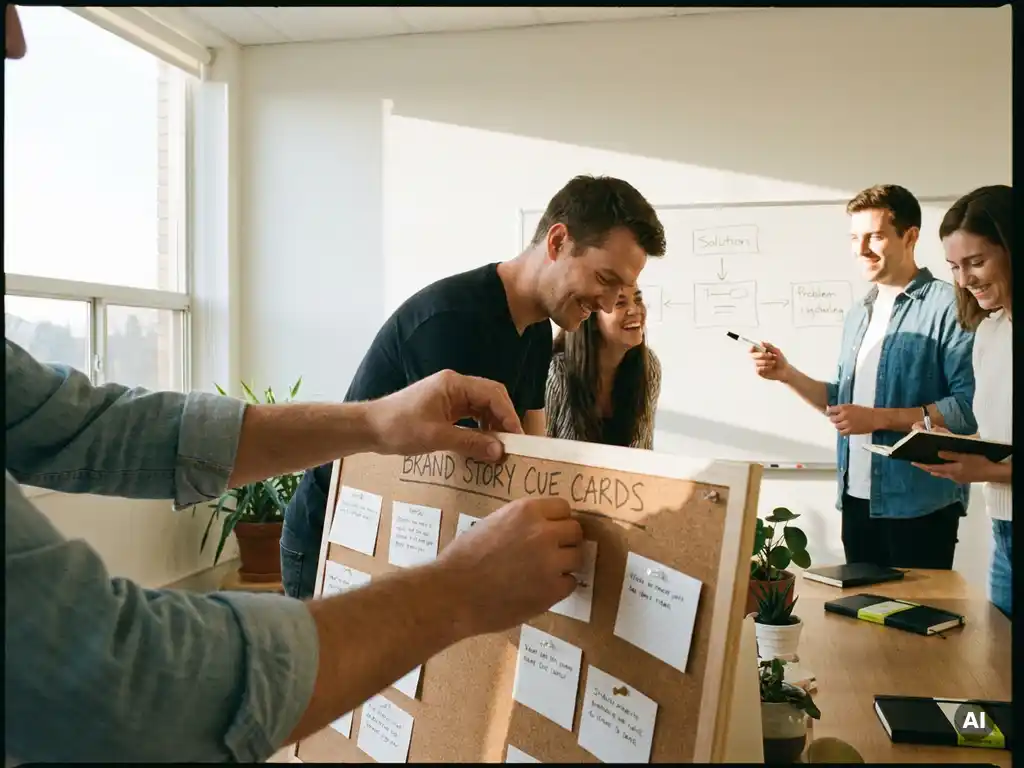
Struggling to get everyone telling the same story after a rebrand? This guide shows how to retrain teams to communicate a new brand story by distilling it into simple talking points, practicing in real scenarios, and reinforcing it through manager coaching and feedback loops. Learn training formats, message alignment checks, and ways to keep language…
-

How do workshops and coaching programmes differ in their results?
Workshops and coaching programmes deliver different kinds of results. A workshop creates fast, shared skill gains—alignment, energy, and a common language your team can use immediately. Coaching builds deeper, sustained behaviour change through repeated practice, feedback, and accountability in real work situations. This guide breaks down realistic workshop outcomes vs coaching programme results, explains learning…
-

What are the advantages and disadvantages of team coaching versus workshops?
Deciding between team coaching and workshops? The real trade-off is depth vs speed: coaching builds lasting behavior change, trust, and accountability through repeated sessions, while workshops deliver fast skill building, shared language, and scalable energy. This guide breaks down the advantages and disadvantages, plus how to choose based on hybrid work friction, information overload, and…
-

How long does team coaching take compared with a workshop?
Wondering whether to book a workshop or commit to team coaching? Workshops typically run 75 minutes to one day for quick alignment and skill practice, while team coaching often spans 6–12 weeks (or 3–6 months) to build habits through real work. Learn what stretches the timeline—trust, stakeholders, change pressure—and how to shorten it with focused…
-

Why don’t departments within large companies work together?
Large companies often reward separation: teams optimize for their own KPIs, budgets, tools, and timelines, so collaboration feels slow and risky. This post explains the real causes of organizational silos—conflicting incentives, fragmented systems, matrix complexity, and hybrid-work communication breakdowns—and offers practical ways to improve cross-functional collaboration and company culture without adding more meetings. Learn the…
-

Which exercises improve interdepartmental communication?
Siloed teams don’t need another vague “communication” talk—they need short, structured drills that force shared context and cleaner handoffs. This post breaks down the most common causes of interdepartmental breakdowns, then gives 10–20 minute exercises like two-sentence handoffs, role-swap briefings, “yes and” alignment rounds, and assumption dumps. You’ll also learn how to run cross-functional workshops…
-

What is a workshop for restoring collaboration between teams?
When teams fall into silos, meetings loop, and conflict resurfaces, a collaboration restoration workshop can reset how work gets done. This guide explains why interdepartmental collaboration breaks, what a strong cross-team alignment workshop includes (roles, handoffs, decision rights, communication habits), and how to measure progress in the first 2–8 weeks. You’ll also see design principles…
-

How do you encourage departments to trust one another more?
Interdepartmental distrust usually isn’t personal—it’s systemic: misaligned incentives, unclear decision rights, broken handoffs, and communication fatigue. This guide shows how to rebuild cross-functional trust fast with a one-session leadership reset, lightweight collaboration processes (RACI/RAPID, “ready/done” standards), and async communication norms like decision logs and one source of truth. You’ll also learn how to measure trust…
-

Which workshop helps teams rebuild trust?
When trust breaks at work, “bonding” isn’t enough. This guide explains which workshop helps teams rebuild trust—typically a psychological safety and communication workshop that blends structured dialogue, practical exercises, and clear behavioral agreements. You’ll learn how team trust workshops work, which activities create real repair (listening rounds, assumption checks, clear requests), and what to look…
-

How do you help teams work together effectively again after tensions?
Tension doesn’t fade just because the conflict ended. This guide shows how to rebuild team collaboration after conflict with a practical reset: name what changed, set 3–5 communication norms, restore psychological safety, and return to real work in small, low-risk sprints that create quick wins. You’ll learn why trust erodes, how to prevent issues looping,…
-

Which exercises help teams communicate better after a difficult period?
After conflict, reorgs, or burnout, teams often lose trust, clarity, and healthy feedback loops—leading to silence in meetings and costly rework. This guide shares short, repeatable team communication exercises that rebuild psychological safety fast: quick trust-building check-ins, blame-free debrief techniques, and listening and feedback drills like paraphrasing and SBI. You’ll also learn how to make…
-

How do you address tensions within a team through training?
Team tensions rarely come down to “personalities”—they come from unclear roles, low trust, feedback avoidance, and decision friction. This guide shows how to use training to reduce conflict fast: diagnose hotspots with interviews and pulse surveys, teach psychological safety and practical feedback, rehearse real scenarios, and set team agreements leaders reinforce. You’ll also learn what…