
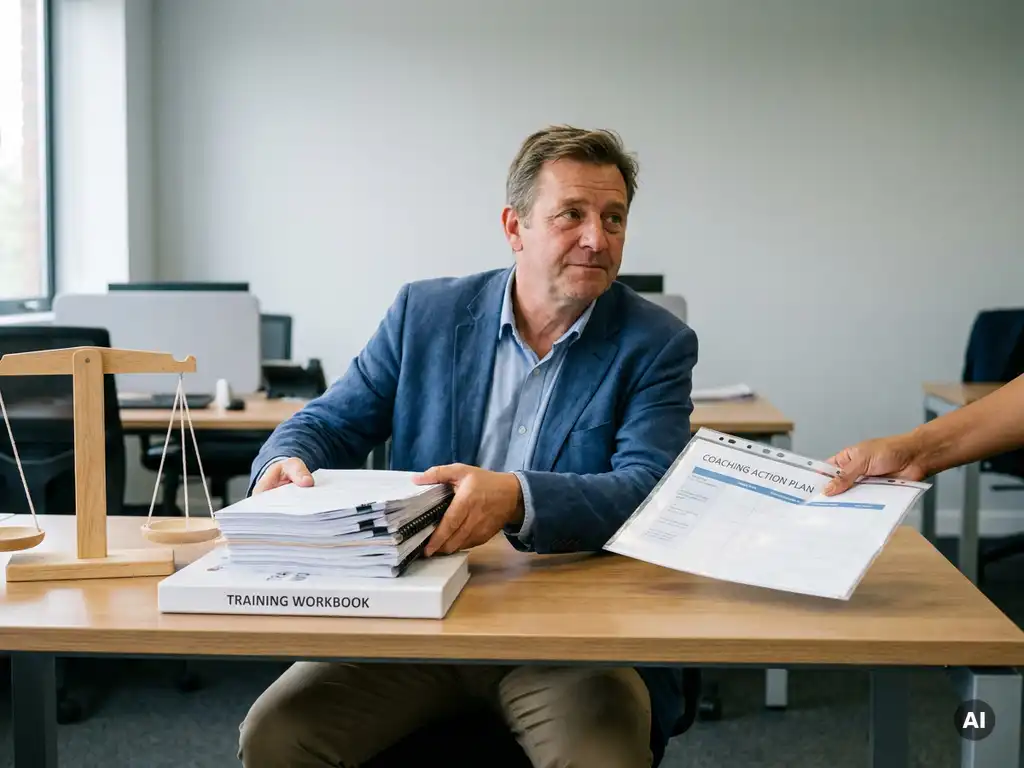
The leadership training that reduces pressure on middle management most is practical, skills-based training that improves delegation and empowerment, strengthens communication and feedback skills, and builds manager resilience and stress management through clear routines and team norms. It works because it removes role ambiguity and stops managers from becoming the default problem solver.
The biggest relief comes when managers learn to set boundaries, create psychological safety and team culture, and distribute decision-making without losing accountability. In 2026, this matters even more as hybrid work and constant change increase the volume and speed of internal communication.
The questions below break down what creates the pressure, what training helps most, and how to choose and measure a program that actually reduces it.
What causes pressure on middle management?
Pressure on middle management usually comes from being squeezed between strategic demands from above and operational reality below, while also acting as the main communication channel. The result is chronic overload: too many decisions, too many escalations, and too little authority to change the system that creates the work.
In practice, that pressure tends to cluster into a few predictable sources:
- Role conflict: managers must deliver targets while protecting team capacity and morale
- Information overload: constant updates, meetings, and messages that must be translated into action
- Low decision clarity: unclear ownership leads to endless alignment and rework
- Escalation culture: teams bring every problem to the manager because it feels safer
- Change fatigue: managers must sell change while still running day-to-day operations
When psychological safety is low, people speak up less, hide risks longer, and escalate late. That forces managers into firefighting mode, which is stressful and inefficient.
Which leadership training reduces pressure the most?
The most effective leadership training for middle managers combines delegation and empowerment training, manager resilience and stress management, and communication and feedback skills anchored in psychological safety and team culture. This mix reduces pressure because it cuts unnecessary escalations, improves decision quality at the right level, and creates predictable ways to handle conflict, priorities, and change.
If you want the biggest reduction in day-to-day strain, prioritize training that builds these capabilities:
- Delegation that sticks: clear outcomes, guardrails, and decision rights so work does not boomerang back
- Empowerment with accountability: teams own solutions while managers coach and remove blockers
- Feedback routines: fast, specific feedback that prevents small issues from becoming crises
- Stress skills: boundary setting, workload triage, and recovery habits managers can repeat weekly
- Psychological safety: norms that make it safe to raise risks early and share imperfect ideas
Research and industry experience consistently point to culture and psychological safety as performance multipliers. When teams feel safe to speak up, they surface problems earlier and solve them faster, which directly reduces the manager’s emotional load and after-hours work.
How to choose the right training for your managers?
Choose leadership training for middle managers by matching the program to the specific pressure pattern you see: overload, conflict, change communication, or low ownership. The right choice has clear behavioral outcomes, includes practice and feedback, and fits your operating reality, including hybrid work, cross-functional collaboration, and the level of decision authority managers actually have.
Use this selection checklist to avoid training that feels inspiring but changes nothing:
- Start with the bottleneck: are managers drowning in approvals, conflict, or unclear priorities?
- Look for practice: role plays, real scenarios, and coached repetition beat lecture-style sessions
- Demand manager tools: templates for delegation, one-on-ones, feedback, and meeting hygiene
- Include the system: align senior leaders on decision rights so empowerment is real
- Plan reinforcement: follow-ups, peer coaching, or manager circles to lock in habits
Also check whether the program addresses communication under pressure. Middle managers often carry the burden of translating strategy into language that teams can act on, so training should include message clarity, storytelling, and handling tough questions without defensiveness.
What to expect from an effective leadership program?
An effective leadership program delivers observable behavior change within weeks, not just motivation on the day. You should expect managers to delegate more cleanly, run shorter and clearer meetings, give more frequent feedback, and create stronger psychological safety and team culture. The program should also reduce stress by giving managers repeatable routines for prioritization and recovery.
Strong programs typically include these elements:
- Clear before and after behaviors: what managers will do differently in one-on-ones, meetings, and escalations
- Realistic scenarios: practice with the conflicts and constraints managers actually face
- Feedback loops: coaching, peer reflection, and specific improvement targets
- Culture mechanics: norms for speaking up, disagreeing well, and owning outcomes
- Communication craft: concise messaging, listening skills, and handling resistance
For organizations navigating transformation, communication often determines whether change lands. Training that sharpens message clarity and delivery helps managers stop overexplaining, reduce repeated questions, and build trust through consistency.
How to measure whether pressure is actually reduced?
Measure reduced pressure on middle management by tracking leading indicators of overload and ownership, not just satisfaction scores. Look for fewer unnecessary escalations, faster decisions at the right level, healthier workload patterns, and improved team climate. Combine short pulse surveys with operational metrics so you can see whether manager resilience and stress management are improving in daily work.
A practical measurement set includes:
- Escalation rate: how often issues jump to the manager that could be solved within the team
- Decision cycle time: time from problem raised to decision made, especially cross-functional
- Meeting load: total hours, recurring meetings removed, and agenda clarity
- After-hours signals: email and chat activity outside working hours as a proxy for overload
- Pulse questions: clarity of priorities, psychological safety, and confidence giving feedback
To connect training to outcomes, measure at three points: baseline, two to four weeks after training, and again at eight to twelve weeks. The goal is to see whether delegation and empowerment training is changing where decisions happen and whether communication and feedback skills are preventing rework.
How X helps with reducing pressure on middle management
We reduce pressure on middle management by training the exact behaviors that prevent overload: clear communication, practical delegation, and team norms that build psychological safety and team culture. Our approach uses high-energy facilitation and business-friendly humor to make the skills memorable, then turns them into repeatable routines managers can use immediately.
- Communication that lands: managers learn to clarify the true message and deliver it with confidence
- Stronger feedback habits: teams address issues earlier, so managers spend less time firefighting
- Culture by daily behaviors: practical norms that improve trust, ownership, and collaboration
- Interactive practice: managers rehearse real scenarios, not generic theory
If you want leadership training for middle managers that actually reduces stress and increases ownership, start with Boom For Business, explore our workshops, or go deeper on Positive Culture. For a high-energy way to reconnect managers and teams, you can also review our team-building options and ask us for a tailored recommendation.
Frequently Asked Questions
How do we clarify decision rights so managers aren’t the default approver?
Create a simple decision-rights map for the top 10 recurring decisions (e.g., hiring, scope changes, customer escalations). For each, define: who recommends, who decides, who must be consulted, and what “good enough” looks like. Publish it in one place, review it in team meetings for two weeks, and have senior leaders back it publicly so decisions don’t boomerang back to the manager.
What are quick delegation “guardrails” that prevent work from bouncing back?
Delegate with three guardrails: (1) outcome (what success looks like), (2) constraints (budget, timeline, non‑negotiables), and (3) check-in points (when you’ll review progress). Add a clear decision boundary: “You can decide up to X; bring me anything above X.” This keeps ownership with the team while protecting quality and risk.
How can middle managers reduce meeting load without losing alignment in hybrid teams?
Run a two-week meeting reset: cancel or shorten recurring meetings by default, require an agenda and desired decision for any meeting, and replace status meetings with an async update (template: priorities, blockers, decisions needed). For hybrid, standardize a single channel for decisions and a 24-hour window for input so people aren’t forced into constant real-time alignment.
What should managers do when psychological safety is low and people won’t speak up?
Start with small, repeatable behaviors: ask for risks first (“What might break?”), thank people for raising issues, and respond with curiosity before solutions. Use a simple norm: “Raise it early, raise it kindly.” If someone speaks up, close the loop publicly on what changed—visible follow-through is what builds safety fastest.
How do we reinforce training so behavior change sticks after the workshop?
Pick 2–3 “non-negotiable” routines for 8–12 weeks (e.g., weekly delegation check-in, biweekly feedback practice, meeting hygiene rules). Pair managers into accountability buddies, run short manager circles every two weeks to troubleshoot real cases, and have leaders recognize the new behaviors (not just outcomes) to signal that the change is expected.
How can HR or senior leaders support middle managers without adding more work?
Remove friction in the system: simplify approvals, clarify priorities, and stop launching initiatives without capacity trade-offs. Provide lightweight tools (one-page templates for delegation, one-on-ones, and decision logs) and protect focus time by setting norms on response expectations. Most importantly, align leaders on what managers can say “no” to—otherwise training won’t reduce pressure.
What’s a practical first step if we can’t run a full program yet?
Start with a 30-day pilot for one team or function: implement a decision log, a delegation template, and a weekly workload triage (top priorities, deprioritized work, risks). Measure escalations, meeting hours, and after-hours messages before and after. Use the results to justify a broader program and tailor it to the real pressure points.
Related Articles
- How do you prevent managers from becoming overloaded with communication tasks?
- How do you measure the results of team training?
- When is humor in business appropriate?
- 9 corporate events that always benefit from professional event moderation
- How do you measure whether a corporate workshop actually changed anything?