
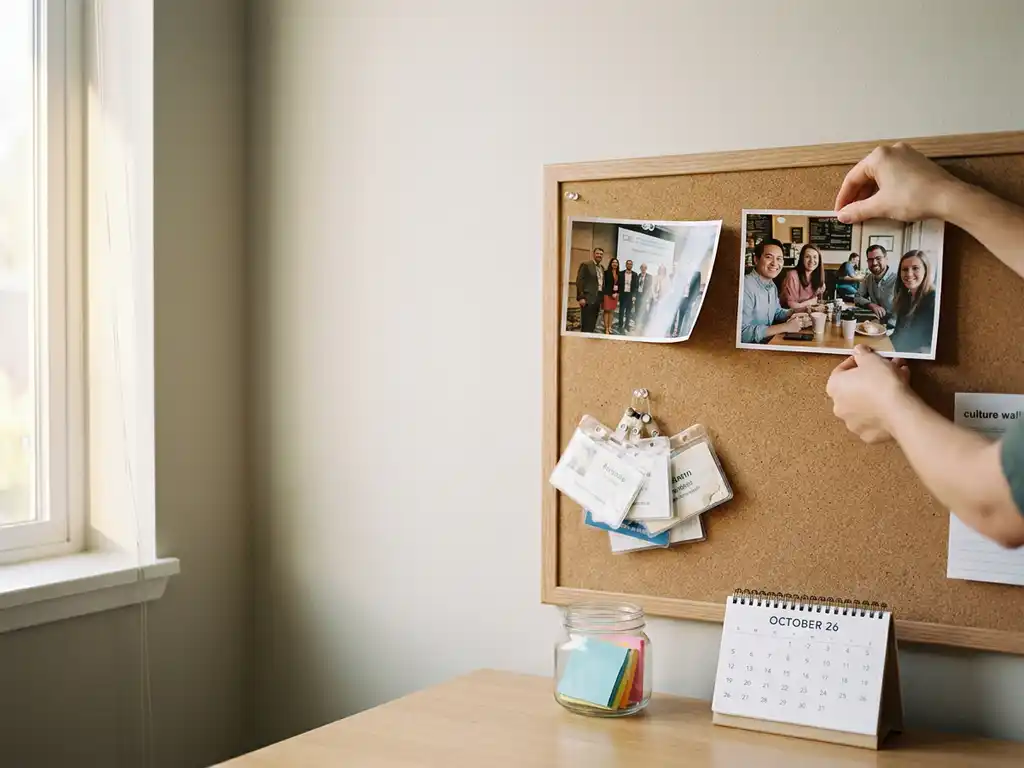
Sustain culture building after an event by turning the event’s best moments into a simple 30 to 90 day rhythm of repeatable habits, clear ownership, and lightweight follow-up communication. The goal is to make desired behaviors easy to repeat, visible to others, and reinforced by leaders and peers.
This works best when you capture specific insights while they are fresh, translate them into a few team agreements, and support them with an internal communication strategy that prioritizes clarity over volume. It also helps to use storytelling in change so people remember what to do when work gets busy.
The questions below break down why momentum fades, what to do next, and how to measure whether culture building is actually sticking.
What does culture building after an event mean,
Culture building after an event means reinforcing the behaviors, language, and decisions you want to see in daily work long after the agenda ends. It turns a one-time experience into team culture building by creating shared norms, practical rituals, and consistent change communication tools that keep employee engagement high.
In practice, culture building is not a poster or a slogan. It is what people do when no one is watching, especially under pressure. After an event, culture work becomes real when teams can answer three questions clearly:
- What do we want more of? Specific behaviors, not value words
- What will we do differently next week? Small actions that fit real calendars
- How will we notice and reinforce it? Peer recognition, leader modeling, and simple check-ins
If your event focused on cultural change or workplace transformation, the follow-through should feel like a cultural change program in miniature: a few priorities, repeated often, supported by managers, and easy to measure.
Why does culture momentum fade after an event,
Culture momentum fades after an event because daily work quickly reasserts old habits, incentives, and communication patterns. Without a clear communication strategy and management training to reinforce new behaviors, people default to what is familiar. The event becomes a memory instead of a new operating system for team culture.
Common reasons the energy drops include:
- No translation into “Monday behaviors” People leave inspired but unsure what to do differently
- Too many priorities Culture building fails when everything is “important” and nothing is chosen
- Manager bottlenecks Leading through change requires managers to repeat and model messages, and many are overloaded
- Communication fatigue If follow-ups feel like more noise, employees tune out
- Low psychological safety People will not try new behaviors if mistakes feel risky
Humor in business can help here when used well: it lowers defensiveness and makes it easier to talk about real friction points. But humor alone is not the system. The system is repetition, clarity, and reinforcement.
How do you turn event insights into repeatable team habits,
Turn event insights into repeatable team habits by capturing the top 3 to 5 behavior shifts you want, assigning ownership, and embedding them into existing routines. The best culture building approach uses small, observable actions, not abstract values. This makes a company culture workshop outcome stick in real work.
Use this simple conversion process right after the event while recall is high:
- Extract the “moments that mattered” Collect quotes, decisions, and tensions that surfaced
- Name the behavior Example: “Ask one clarifying question before disagreeing”
- Define the trigger When will we do it? Example: “In project kickoffs and retros”
- Make it visible Add a one-line prompt to meeting templates or team channels
- Reinforce weekly One minute in a team meeting for wins and learnings
To support cultural change, pair habits with a light form of organizational culture training for managers: give them a short script, a few coaching questions, and permission to repeat the message often. Repetition is not nagging when it is consistent and useful.
Which follow-up communications keep culture alive without spamming people,
Follow-up communications keep culture alive without spamming people when they are predictable, brief, and tied to real work moments. A strong internal communication strategy uses fewer messages with higher relevance, reinforces the same culture building themes, and invites two-way feedback. This improves employee engagement without adding noise.
Choose a small set of channels and stick to a cadence people can trust:
- 48 hour recap Three takeaways, three next actions, and who owns them
- Weekly micro prompt One question leaders ask in meetings to reinforce team culture
- Biweekly story A short example of the new behavior in action, using storytelling in change
- Monthly pulse check Two to three questions that measure clarity and adoption
- Manager toolkit Talking points and change communication tools that reduce manager guesswork
Keep messages skimmable and consistent. If you need to add something new, remove something else. That tradeoff is the difference between a communication strategy and a content dump.
How do you measure whether culture building is working after the event,
Measure whether culture building is working after the event by tracking behavior adoption, communication clarity, and business-relevant outcomes over 30, 60, and 90 days. The best approach combines qualitative signals, like stories and observations, with lightweight quantitative checks, like pulse questions and participation rates.
Use a simple measurement stack that does not require heavy tooling:
- Behavior metrics Are the new habits happening in meetings, handoffs, and decisions?
- Manager consistency Are leaders repeating the same messages and modeling them?
- Employee understanding Can people explain the “why” and the “what now” in one sentence?
- Engagement signals Are people contributing ideas, giving feedback, and raising issues earlier?
- Friction indicators Fewer escalations, clearer ownership, faster alignment on priorities
For change management training and management training programs, measurement improves when you define success in observable terms. Instead of “better culture,” aim for “faster decisions,” “cleaner handoffs,” or “more candid retros.” Culture shows up in how work moves.
How Boom for Business helps with sustaining culture building after an event,
We help sustain culture building after an event by turning your key messages into repeatable behaviors, equipping leaders with practical change communication tools, and using business-friendly humor and improvisation to make the message memorable without feeling forced. Our approach supports workplace transformation by combining a clear internal communication strategy with interactive practice that teams actually use.
- Culture to habit conversion We translate event insights into a small set of team habits with clear triggers and ownership
- Leader enablement We strengthen leading through change with practical scripts, prompts, and employee communication training
- Interactive reinforcement We use storytelling in change and improv-based exercises to make new behaviors easy to repeat
- Custom formats From a company culture workshop to a culture transformation workshop, we tailor the program to your goals and audience
If you want culture momentum that lasts beyond the applause, start with Boom For Business and explore our workshops to build a sustainable cultural change program for your team.
Frequently Asked Questions
What should we do in the first 24 hours after the event to lock in momentum?
Run a 30-minute “translation” huddle with the core team: pick 3–5 behaviors to keep, write one sentence for each (“When X happens, we will do Y”), assign a single owner, and schedule the first two check-ins (week 1 and week 2). Publish a short recap only after owners and dates are confirmed.
How do we choose the right 3–5 behaviors without turning it into a debate?
Use three filters: (1) Observable (you can see/hear it in meetings), (2) High-frequency (it happens weekly), and (3) High-leverage (it reduces friction or speeds decisions). If two behaviors compete, choose the one that removes the biggest recurring pain point.
What if managers weren’t at the event or don’t buy in?
Give them a “minimum viable manager kit”: a 5-minute briefing, two talking points, one meeting prompt, and one recognition example. Ask for a 30-day trial, not permanent commitment, and track one visible behavior they can model immediately (e.g., clarifying ownership at the end of meetings).
How do we reinforce culture habits in remote or hybrid teams?
Embed prompts where work already happens: add a one-line reminder to agenda templates, use a rotating “behavior spotter” in video meetings, and collect quick wins in a shared channel. Keep reinforcement asynchronous (short clips, screenshots, or two-sentence stories) so time zones don’t block participation.
What should we do when people slip back into old habits?
Treat it as a system issue, not a motivation issue. Identify the trigger (busy week, unclear incentives, missing template), then add a small guardrail: a checklist item, a meeting close-out question (“Who owns next?”), or a peer nudge role. Reset publicly and briefly—no long postmortems.
What are good pulse survey questions to use at 30/60/90 days?
Keep it to 2–3 items: (1) “I can name the top culture habits we’re practicing” (agree/disagree), (2) “In the last two weeks, I’ve seen leaders model them” (yes/no + example), and (3) “These habits make my work easier” (1–5). Add one open text: “What’s getting in the way?”
Related Articles
- Which creative techniques produce better ideas during a brainstorming session?
- How do you align employees with a new brand story after a merger?
- How do you turn employee insights into action quickly?
- How do you reduce information overload in internal communications?
- How do you improve team culture without forced fun?