
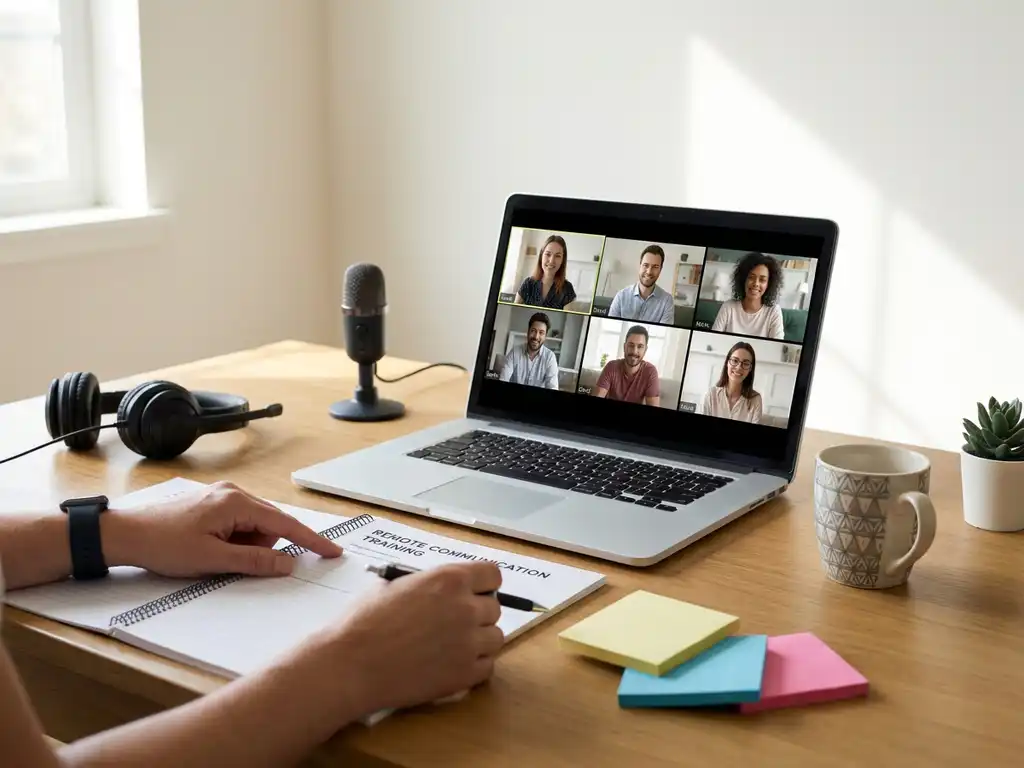
Deliver employee communication training for remote teams by teaching a small set of repeatable habits and tools, then practicing them in short, interactive sessions that mirror real work. Combine clear standards for written and live communication with role-based scenarios, feedback loops, and manager reinforcement so the training changes daily behavior.
This approach supports a stronger internal communication strategy during workplace transformation, when information overload, low employee engagement, and inconsistent change communication tools can derail alignment. Remote teams need clarity, cadence, and culture building that works across time zones and channels.
The questions below break down what to train, how to deliver it, and how to measure whether it is sticking.
What is employee communication training for remote teams?
Employee communication training for remote teams is a structured program that builds the skills, norms, and routines people need to communicate clearly across digital channels. It focuses on written clarity, meeting discipline, feedback habits, and inclusive collaboration so distributed teams reduce misunderstandings, improve employee engagement, and protect team culture.
Unlike generic management training, remote-focused employee communication training makes the invisible visible. It defines what “good” looks like in Slack or Teams, email, project tools, and video calls, then gives people practice and coaching. It also supports change management training by helping leaders and teams communicate decisions, context, and next steps consistently during cultural change.
- Skills: writing, listening, facilitation, feedback, storytelling in change
- Standards: response times, channel choice, meeting rules, documentation
- Routines: updates, decision logs, retrospectives, manager check-ins
- Culture: psychological safety, inclusion, humor in business used appropriately
How do you design a remote communication training program that actually sticks?
Design remote communication training that sticks by starting with real communication breakdowns, then building a simple communication strategy people can repeat under pressure. Keep the program short, role-specific, and practice-heavy, and add reinforcement from managers so new behaviors become the default during daily work and leading through change.
- Diagnose the friction points: where do handoffs fail, where do decisions get lost, which meetings waste time, and where does change communication break down.
- Define “team agreements”: channel rules, meeting norms, documentation standards, and escalation paths. These become your internal communication strategy in action.
- Train by role: contributors need clarity and async habits, managers need coaching and alignment skills, leaders need narrative and consistency for cultural change.
- Practice with real scenarios: rewrite messy messages, run a tight standup, facilitate a decision, deliver a change update, handle conflict in writing.
- Reinforce for 4 to 6 weeks: manager prompts, templates, peer feedback, and quick refreshers. Without reinforcement, training becomes a one-time event.
To support culture building, include explicit behaviors that protect team culture in remote settings, such as how to disagree respectfully in writing, how to include quieter voices, and how to close loops so people do not feel ignored.
Which communication skills matter most for distributed teams?
The most important communication skills for distributed teams are written clarity, async collaboration, meeting facilitation, feedback and conflict skills, and change communication. These skills reduce information overload, prevent siloed work, and strengthen company culture by making expectations, decisions, and priorities easy to understand across locations and time zones.
- Written communication: clear subject lines, structured updates, explicit asks, and decision summaries.
- Async collaboration: documenting context, using threads well, and setting deadlines that respect time zones.
- Meeting discipline: agendas, roles, time-boxing, and crisp outcomes with owners and dates.
- Listening and feedback: reflective listening, asking better questions, and giving actionable feedback without tone issues.
- Storytelling in change: explaining the why, naming tradeoffs, and connecting work to purpose during workplace transformation.
- Cross-team communication: handoff checklists and shared language to reduce silos and support team culture building.
If you are running a cultural change program or creative change management initiative, prioritize the skills that help leaders communicate consistently and help employees ask questions safely. That is where engagement and trust usually rise or fall.
How can you deliver remote communication training in engaging formats?
Deliver remote communication training in engaging formats by mixing short live sessions with async practice, then using interactive exercises that feel like real work. The best formats keep cameras optional when appropriate, require participation through chat and collaboration tools, and use humor in business carefully to lower tension and increase retention.
Live, interactive formats that work remotely
- 60 to 90 minute workshops: one skill at a time, with breakout practice and fast feedback.
- Role-play simulations: difficult stakeholder updates, conflict in writing, or leading through change conversations.
- Facilitated meeting labs: participants run a meeting segment and get coaching on clarity and inclusion.
- Company culture workshop sessions: define behaviors that support company culture and team culture across remote contexts.
Async and blended formats that drive behavior change
- Message rewrite drills: turn vague updates into clear requests and decisions.
- Templates and checklists: change communication tools like update formats, decision logs, and meeting notes.
- Peer review: lightweight feedback on real messages before they go out.
- Micro-learning: short prompts over two to four weeks to reinforce habits.
Engagement comes from relevance and repetition, not entertainment alone. Use energy and creativity, but always tie exercises to the communication strategy your team needs to execute.
How do you measure whether remote communication training is working?
Measure whether remote communication training is working by tracking behavior change, communication quality, and business outcomes tied to clarity and speed. Use a simple before and after baseline, then monitor leading indicators like fewer clarification loops and better meeting outcomes, plus lagging indicators like engagement and change adoption.
- Behavior metrics: percentage of meetings with agendas, documented decisions, and clear owners and deadlines.
- Quality checks: spot review of updates for clarity, structure, and explicit asks.
- Cycle time signals: fewer back and forth messages, faster approvals, smoother handoffs across departments.
- Employee engagement inputs: pulse questions on clarity, confidence to speak up, and understanding of priorities.
- Change outcomes: during cultural change, track comprehension of the why, perceived consistency, and manager readiness.
To keep measurement fair, define what “good” looks like in advance. Then review progress at two points: two weeks after training for early adoption, and six to eight weeks later to confirm the habits stuck.
How Boom for Business helps with employee communication training for remote teams?
We help remote teams build communication habits that land clearly and feel human, especially during workplace transformation and cultural change. We combine practical communication strategy with improvisation, storytelling in change, and business-friendly humor so people practice real scenarios, not theory, and managers leave with tools they can reinforce immediately.
- Interactive training: high participation sessions that improve clarity, listening, and feedback without awkwardness
- Change-ready messaging: change management training elements that strengthen change communication tools and consistency
- Culture building: company culture workshop formats that support team culture building across locations
- Manager enablement: management training focused on facilitation, alignment, and leading through change
If you want employee communication training that fits your remote reality, explore our workshops or contact us directly via Boom For Business to design a program for your teams.
Frequently Asked Questions
How long should a remote communication training program be to avoid fatigue but still create change?
Aim for 3–6 weeks of reinforcement around 2–4 core skills. Use one 60–90 minute live session per week (or biweekly) plus 10–15 minutes of async practice. Keep each module focused on a single habit (e.g., “clear asks” or “decision logging”) and measure adoption weekly so you can adjust quickly.
What should we do if our team uses too many tools (Slack, Teams, email, project apps) and messages get lost?
Create a simple “channel map” in one page: what goes where, expected response times, and how decisions are recorded. Then add two rules: (1) decisions must be captured in a shared decision log, and (2) every request includes an owner and due date. Pilot the map with one team for two weeks before rolling it out company-wide.
How do you train communication across time zones without forcing people into more meetings?
Standardize async updates: a weekly written update template, a daily/biweekly status thread, and a handoff checklist for cross-time-zone work. Use “follow-the-sun” norms (clear deadlines, explicit blockers, and tagged owners) and reserve live sessions for high-stakes alignment or conflict—then document outcomes immediately.
How can managers reinforce the training without micromanaging?
Give managers a short reinforcement kit: 3 prompts for 1:1s (clarity, priorities, blockers), a meeting checklist (agenda, roles, outcomes), and a lightweight message review rubric (context, ask, deadline, decision). Ask managers to model the behaviors in their own updates and to praise specific examples publicly to make the norm visible.
What’s a practical way to handle tone and conflict in written messages on remote teams?
Adopt a “pause and clarify” protocol: if a message feels sharp, move to a quick call or voice note, then summarize the outcome in writing. Train people to separate facts, impact, and request (“When X happened… it impacted Y… can we agree to Z by Friday?”). Encourage using neutral language and avoiding sarcasm in high-stakes threads.
What templates should we create first to make the training easier to apply?
Start with four templates that cover most work: (1) a structured update (context → progress → risks → asks), (2) a meeting agenda + notes with owners/dates, (3) a decision record (options, decision, rationale, owner, review date), and (4) a change update (why, what’s changing, what’s not, timeline, where to ask questions). Keep them short and store them where people already work.
How do we onboard new hires into our remote communication norms so the culture stays consistent?
Add a 30–45 minute “communication onboarding” session in the first two weeks, plus a one-page playbook with examples of good messages, meeting norms, and escalation paths. Pair new hires with a buddy to review one real update or meeting note in week one, and check understanding in the first manager 1:1 using the same standards as the training.