
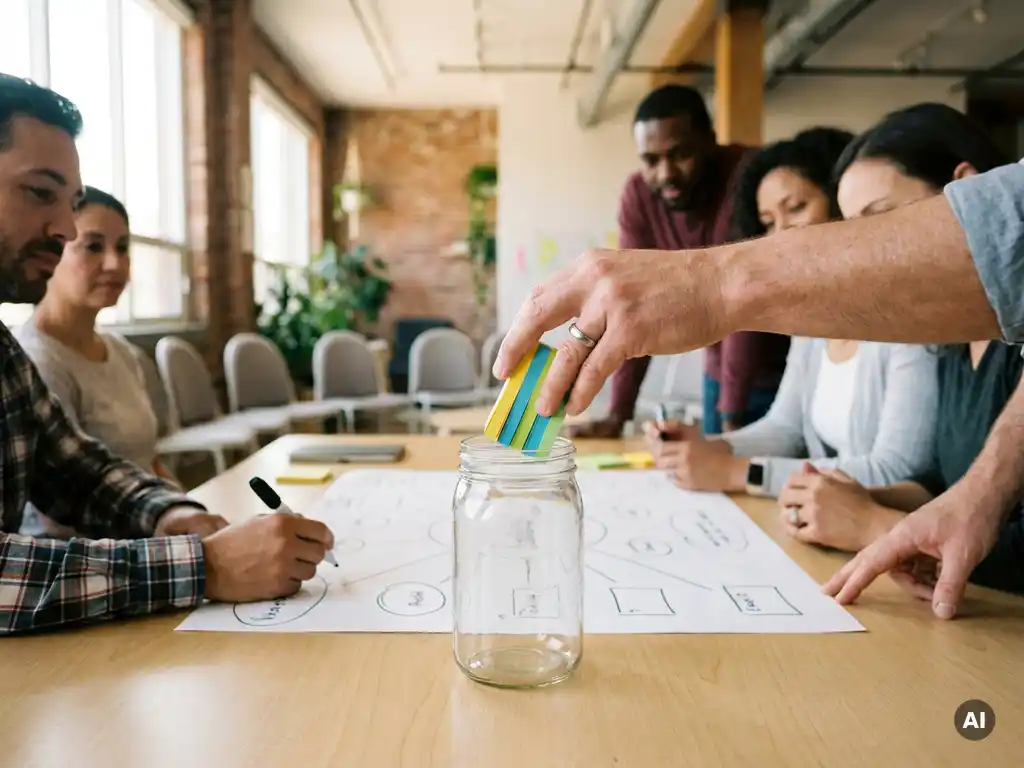
An engagement workshop is truly effective when it creates measurable participation in the moment and sustained behavior change afterward. The best workshops combine clear goals, psychologically safe interaction, and practical exercises that improve team communication, so people leave aligned, energized, and able to act differently at work.
Effectiveness depends less on flashy activities and more on intentional design: the right group, the right questions, and interactive facilitation that helps every voice be heard. When those elements work together, workshop outcomes show up in better collaboration, clearer decisions, and stronger ownership.
The questions below break down what an engagement workshop is, what it should deliver, and how to design and measure it.
What is an engagement workshop?
An engagement workshop is a structured, interactive session that helps employees connect to a shared purpose, contribute ideas, and commit to specific actions that improve how work gets done. Unlike a presentation, an employee engagement workshop relies on participation, dialogue, and practice, so engagement becomes a behavior, not just a feeling.
In practice, engagement workshops sit at the intersection of culture, communication, and execution. They can support a strategy rollout, strengthen cross-team collaboration, improve feedback habits, or rebuild connection after change.
Most effective formats include three ingredients:
- Clarity: a focused theme and a small number of decisions or outputs
- Interaction: exercises that require contribution, not observation
- Commitment: concrete next steps with owners and timelines
What outcomes should an effective engagement workshop deliver?
An effective engagement workshop should deliver clear workshop outcomes that show up as better alignment, stronger team communication, and visible follow-through. The most reliable outcomes are specific decisions, shared language, and agreed behaviors, not just high energy in the room. If nothing changes after the session, engagement did not truly increase.
To make outcomes tangible, define them as outputs you can see, use, or measure within weeks. Common high-value outcomes include:
- Shared priorities: the team agrees on what matters most and what can wait
- Behavior agreements: simple norms for meetings, feedback, and collaboration
- Risks surfaced early: people name blockers, confusion, or misalignment safely
- Ownership: clear owners for next steps, with dates and success criteria
- Improved psychological safety: more people speak up, ask questions, and challenge ideas respectfully
If your goal is culture change, aim for outcomes tied to everyday behaviors. Research and industry experience consistently point to trust, clarity, and psychological safety as practical drivers of high-performing teams.
How do you design an engagement workshop that works?
You design an engagement workshop that works by starting with a narrow purpose, then building a sequence of activities that move from insight to decisions to commitments. Strong design protects time for interaction, uses prompts that invite honest input, and ends with specific actions. This approach makes interactive facilitation easier and results more durable.
A simple design process that works across most teams:
- Define the “why now”: what problem must this workshop solve in 2026, and what happens if it does not?
- Choose 1 to 3 outcomes: for example a decision, a plan, and a behavior agreement
- Map the participant mix: include the people who own the work and the people affected by it
- Design for contribution: plan moments where everyone writes, speaks, and prioritizes
- Build a commitment close: owners, deadlines, and how progress will be reviewed
Also design the “container” around the content. Send a short pre-read, set expectations for participation, and make it clear what will be decided in the room versus what will be explored.
What facilitation techniques increase participation and psychological safety?
Participation and psychological safety increase when facilitation makes it easy to contribute, safe to disagree, and clear how input will be used. The best interactive facilitation balances structure with flexibility: it sets simple rules, uses small-group formats, and normalizes learning in public. When people feel respected and heard, team communication improves fast.
Use techniques that reduce status pressure and invite more voices:
- Start with silent thinking: individuals write first, then share, which prevents the loudest voice from setting the agenda
- Use pairs and trios: small groups create safer entry points than full-room discussion
- Ask for “yes, and” builds: participants add to ideas before evaluating them, which increases creativity and trust
- Name the norm: explicitly state that questions, uncertainty, and respectful challenge are welcome
- Separate ideas from identity: critique proposals, not people
- Close loops: summarize what you heard and what will happen next, so input feels meaningful
Psychological safety is not about avoiding tension. It is about making it safe to surface issues early, so teams solve problems faster and collaborate with less friction.
How do you measure and sustain engagement after the workshop?
You measure and sustain engagement after a workshop by tracking follow-through on commitments and monitoring a few simple signals of participation over time. The most practical approach combines short pulse checks, observable behavior metrics, and regular review moments. Sustained engagement shows up when people keep contributing, not when they simply report they enjoyed the session.
To measure engagement without overcomplicating it, combine:
- Commitment tracking: percentage of actions completed on time and quality of outcomes delivered
- Participation signals: who speaks in meetings, how often questions are asked, and whether dissent appears earlier
- Pulse questions: 3 to 5 recurring items on clarity, ownership, and psychological safety
- Manager observations: examples of improved cross-team collaboration and fewer repeated misunderstandings
To sustain momentum, schedule a 2-week and 6-week follow-up. Revisit the behavior agreements, remove blockers, and refresh the shared language. Engagement fades when the workshop becomes a one-off event instead of a new operating rhythm.
How Boom For Business helps with engagement workshops
We help teams run engagement workshops that feel energizing in the room and practical afterward by combining professional facilitation with improv-based methods that strengthen team communication and psychological safety. Our approach keeps participation high, turns complex messages into clear stories, and helps groups leave with commitments they can actually execute.
- Interactive workshop design: outcomes-first agendas that drive decisions and ownership
- Interactive facilitation: high-participation formats that bring quieter voices into the conversation
- Psychological safety techniques: practical norms and exercises that make it safer to speak up and collaborate
- Storytelling support: clearer narratives so strategy and change messages land and stick
- Culture-building programs: behavior-based modules that help teams build trust, clarity, and ownership
Explore our approach at Boom For Business, see our workshop options, learn about Positive Culture, or browse team-building experiences. If you want an engagement workshop tailored to your goals, contact us to start the conversation and request a quote.
Frequently Asked Questions
How long should an engagement workshop be to stay productive?
For most teams, 90 minutes to 3 hours is the sweet spot for real participation without fatigue. Use 90–120 minutes for a single outcome (e.g., behavior agreements) and a half-day for multiple outcomes (e.g., priorities + norms + action plan). If you need a full day, split it into two shorter sessions with a clear “between-session” assignment.
Who should attend—and who should not?
Invite the people who own the work and the people most affected by the decisions, plus a sponsor who can remove blockers. Keep the group small enough for everyone to contribute (often 8–16). Avoid “spectators” who have no role in follow-through, and don’t mix groups with unresolved power dynamics unless you design separate breakouts or anonymous input to protect candor.
What should we do before the workshop to make it worth the time?
Send a short pre-work packet 3–5 days ahead: the purpose (“why now”), what will be decided, and 2–3 prompts for input. Ask participants to bring one example of a friction point and one example of what’s working. Confirm decision rights (who can decide what) so the session doesn’t stall.
How do you handle dominant voices or quiet participants during the session?
Use structures that equalize airtime: silent writing first, round-robin sharing, and time-boxed turns. Assign roles in small groups (facilitator, scribe, reporter) and rotate them. If someone dominates, name the pattern neutrally (“Let’s hear from two people who haven’t spoken yet”) and return to the agreed participation norms.
What are good follow-up steps in the first week after the workshop?
Within 48 hours, share a one-page recap: decisions made, behavior agreements, action owners, deadlines, and how progress will be reviewed. Schedule the first check-in immediately (15–30 minutes). Ask each owner to define a “done” criterion and the first next step they will complete within 7 days to build momentum.
How can remote or hybrid teams run an engagement workshop without losing energy?
Shorten segments (5–10 minutes), increase interaction frequency, and use collaborative docs/whiteboards for simultaneous input. Keep cameras optional but participation required via chat, polls, or written contributions. Use breakout rooms with clear tasks and a shared template, and plan more breaks than you would in-person.
Related Articles
- What internal communication KPIs should you track in 2026?
- 9 corporate event host skills that make the difference on the day itself
- 9 ways to make fun team building feel purposeful to a corporate audience
- How do you choose the right team building activities?
- How do improvisation techniques enhance team building?