
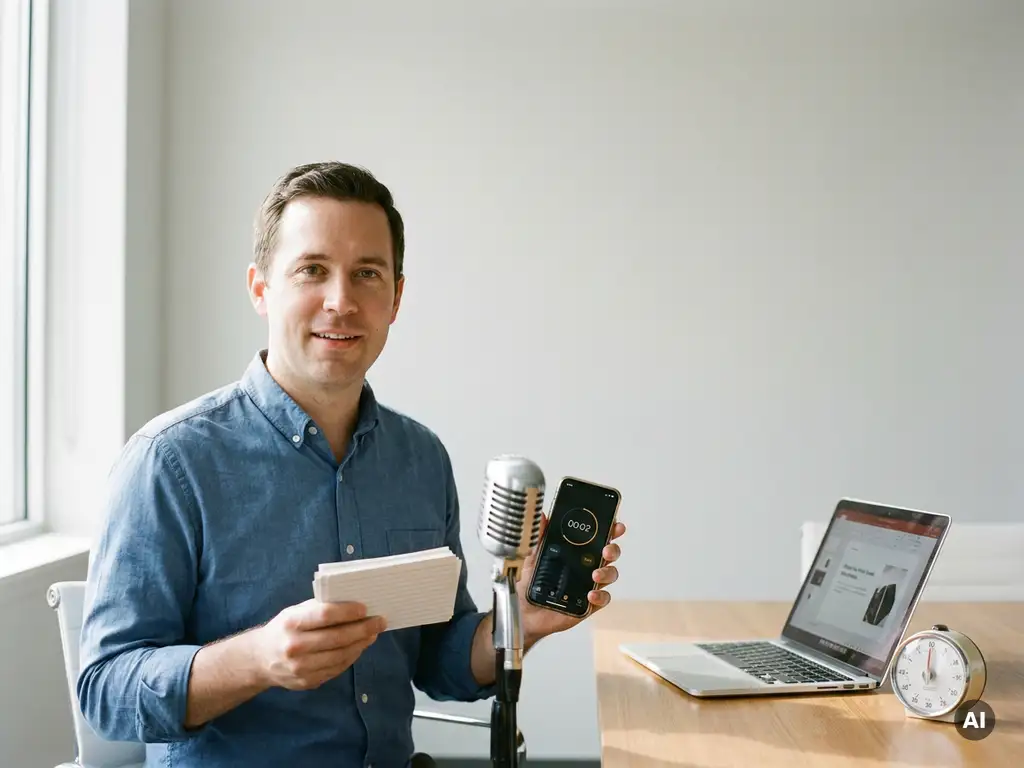
The best training format for short pitches is a blended approach: a short, high-intensity workshop to build a clear pitch structure, followed by brief weekly practice sprints with fast feedback. This format improves clarity and confidence quickly because it combines skill building, repetition, and real-world rehearsal under time pressure.
For most teams in 2026, the deciding factor is not the “perfect” script. It is whether people can deliver a message that sounds human, adapts to different audiences, and stays consistent across the organization.
Below are the key questions people ask about short pitch training, with direct answers and practical ways to apply them.
What is a short pitch and what makes it effective?
A short pitch is a 30 to 90-second message that explains what you do, why it matters, and what you want next in language a listener can repeat. An effective short pitch is specific, audience-focused, and easy to remember, with one clear point and a simple call to action.
Think of a short pitch as a decision shortcut for the listener. They should quickly understand three things: the problem, the value, and the next step. If you try to include everything, you create noise and the pitch collapses under its own weight.
- One core message: the single idea you want remembered
- Concrete value: what changes for the listener or customer
- Proof cue: a quick example, result type, or credible detail without a long story
- Audience language: words they use, not internal jargon
- Clear ask: meeting, intro, trial, decision, or next conversation
If your pitch cannot be repeated by someone else after one listen, it is not short enough or not clear enough.
Which training format works best for short pitches?
The most effective short pitch training format is a live, interactive workshop that teaches a repeatable pitch framework, immediately followed by timed delivery drills and peer feedback. Compared with self-study alone, a workshop format accelerates improvement because participants practice under pressure, refine wording in real time, and learn by hearing multiple versions.
In practice, the best “pitch workshop format” depends on how quickly you need results and how consistent the message must be across a team.
- Fastest improvement: 60 to 120-minute pitch workshop plus drills and feedback
- Best for consistency: workshop plus a shared template and team calibration rounds
- Best for confidence: repeated elevator pitch practice with low-stakes reps and coaching
- Best for busy teams: micro-sessions of 10 to 15 minutes over several weeks
Use a workshop to build the pitch, then use short repetitions to make it sound natural. That combination is also how strong presentation skills training works: learn the tool, then build the habit.
How can you practice short pitches quickly without sounding scripted?
You can practice short pitches quickly without sounding scripted by memorizing a structure, not a script, and rehearsing multiple “versions” of the same pitch for different audiences. When you train the building blocks, you stay fluent under pressure and can adapt your wording while keeping the message consistent.
Speed comes from constraints. Set a timer, pick one audience, and deliver. Then adjust one thing only and repeat. This prevents overediting and helps your voice stay conversational.
- Lock the structure: problem, value, proof cue, ask
- Write three openings: one for a customer, one for a leader, one for a peer team
- Do timed reps: 90 seconds, then 60, then 30
- Swap one variable: change only the proof cue or the ask each rep
- Practice out loud: silent practice does not train pacing or pronunciation
A good rule: if you sound scripted, you likely overmemorized sentences. Replace full sentences with keywords and transitions you can say naturally.
What feedback methods improve short pitches the fastest?
The fastest way to improve a short pitch is to use tight feedback loops that focus on one measurable outcome per round, such as clarity or credibility. The best methods combine self-review, peer reactions, and a facilitator who can spot what the speaker cannot hear, like pacing, filler words, and unclear phrasing.
To keep feedback useful, limit it. Too many notes create confusion and slow progress.
- One-sentence playback: ask listeners to repeat what they think you do in one sentence
- Stop start continue: one thing to stop, one to start, one to keep
- Clarity score: rate 1 to 5, then explain the gap in one line
- Video review: watch once with sound off for body language, once with eyes closed for vocal clarity
- Objection drill: listeners ask the toughest question, speaker answers in 15 seconds
When the listener’s one-sentence summary matches your intended message, your pitch is working. When it does not, rewrite for simpler language and a sharper value statement.
How do you choose a pitch training format for your team?
Choose a pitch training format by matching the format to your team’s goal, time available, and the level of message alignment you need. If you need a consistent story across departments, prioritize a facilitated workshop with shared templates. If you need individual confidence fast, prioritize repeated drills and coaching-style feedback.
Use these decision questions to pick the right approach quickly.
- How aligned is the message today? low alignment needs a group workshop first
- How many people must pitch? larger groups benefit from team pitch exercises and peer rounds
- Where will the pitch be used? sales calls, internal updates, panels, or change communication require different proof cues and asks
- How much time can you protect? one workshop plus short follow-ups beats a long program nobody attends
- What is the risk level? high-stakes moments need rehearsal under realistic conditions
If your organization struggles with siloed communication, build cross-functional practice pairs. When people hear how other teams describe the same strategy, the shared narrative tightens fast.
How does Boom For Business help with short pitch training?
We help teams build short pitch training that stays clear, human, and consistent by combining proven storytelling structure with improvisation-based practice. Our approach strengthens elevator pitch practice through real-time drills and practical feedback, so people can deliver a message that lands even when the room changes.
- Pitch framework that scales: a shared structure teams can reuse across roles and departments
- High-energy practice: timed reps, audience switching, and team pitch exercises that build confidence fast
- Business-friendly humor: helps messages stick without feeling forced or awkward
- Facilitators with stage experience: clear coaching on wording, pacing, and pronunciation
- Flexible formats: from short sessions to deeper presentation skills training depending on your timeline
To explore options, start at Boom For Business, review our workshop formats, or see how we support a positive culture through communication. If you want to combine pitch work with connection and energy, our team building options can be integrated into the same day. Reach out to X to share your goal, audience, and timing, and we will recommend a practical format that gets your pitches ready fast.
Frequently Asked Questions
How do you tailor a short pitch for different audiences without rewriting it from scratch?
Keep the same core message and swap only three elements: (1) the problem framing (what they care about), (2) the proof cue (a result or example relevant to them), and (3) the ask (the next step they can say yes to). Create a simple “audience swap sheet” with 2–3 versions for customers, leaders, and partners so everyone stays consistent while sounding natural.
What should you do if your pitch runs long or you keep getting interrupted?
Build a “30-second spine” you can deliver even if you’re cut off: one line on the problem, one line on the value, and a clear ask. Practice starting with the ask (“If this is relevant, I’d love a 15-minute chat…”) and then filling in details only if you’re invited. If you’re interrupted, answer briefly and return to the spine instead of restarting the whole pitch.
How can remote or hybrid teams practice short pitches effectively?
Use short, repeatable routines: record a 60-second pitch on your phone or in Slack/Teams, get one-sentence playback from two peers, then re-record once. Run 10-minute “pitch sprints” on video calls with timed rounds (90/60/30 seconds) and a single feedback metric per round (clarity, credibility, or ask). Save the best version in a shared library for onboarding and consistency.
What metrics can you use to measure whether pitch training is working?
Track outcomes that reflect real comprehension and next steps: (1) one-sentence playback match rate (how often listeners repeat the intended message), (2) time-to-clarity (how quickly someone understands what you do), (3) conversion to the next step (meetings booked, intros, trials), and (4) consistency across speakers (how similar the core message sounds across the team). Review monthly and adjust the template, not just individual wording.
How do you handle tough questions or objections during a short pitch?
Prepare three “15-second answers” to the most common objections (price, differentiation, and proof). Use a simple pattern: acknowledge, clarify, answer, and return to the ask (e.g., “Totally fair—what matters is X. Here’s how we handle it… Would it be useful to look at a quick example?”). Practice this as a drill so you don’t over-explain under pressure.
What’s the best way to keep a team’s pitch consistent without making it sound robotic?
Standardize the structure and the key terms, not the exact sentences. Create a shared pitch template with required elements (problem, value, proof cue, ask) plus a short list of “must-use” phrases and “avoid” jargon. Then allow personal phrasing and role-specific proof cues. Calibrate quarterly by having everyone deliver their version and checking for message drift.
What should someone do if they’re new to pitching and feel anxious speaking under time pressure?
Start with low-stakes reps: practice the 30-second version first, then expand to 60 and 90 seconds. Use keyword notes instead of memorizing full sentences, and rehearse standing up to improve breath and pacing. If anxiety spikes, slow down and shorten—clarity beats speed. Aim for 5 short reps a week rather than one long practice session.