
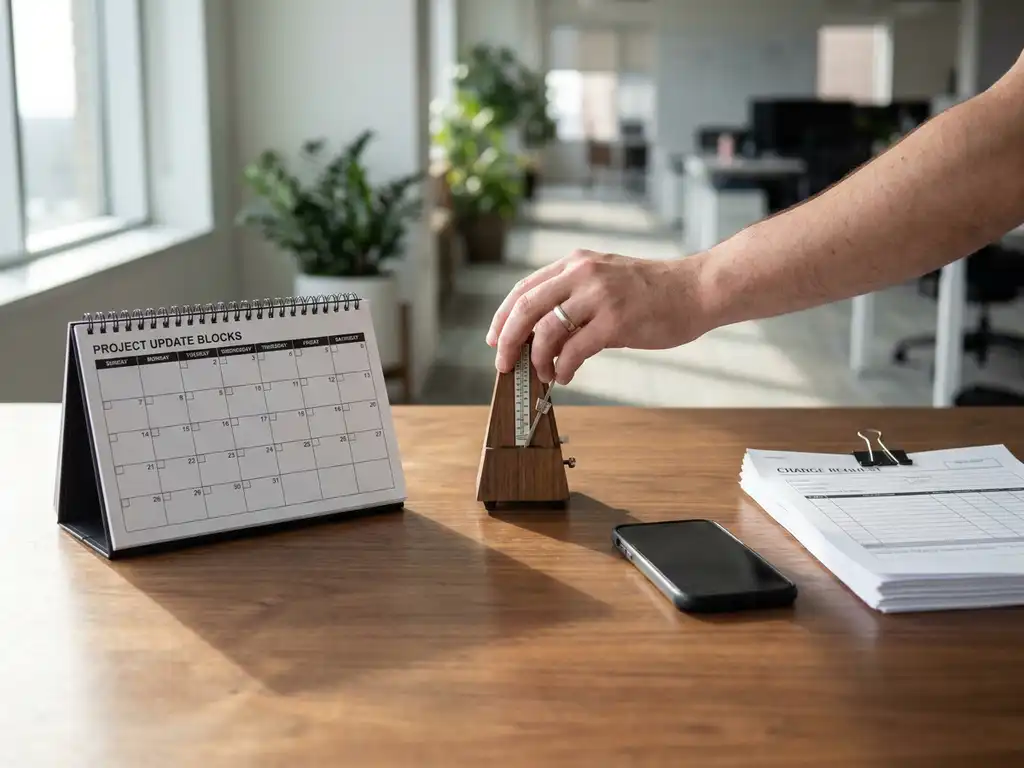
The best cadence for change updates is a predictable weekly rhythm for most employees, paired with short, targeted micro updates as milestones happen and a monthly leadership recap for context. This cadence keeps attention high without creating communication fatigue, and it supports leading through change with clarity.
The right frequency depends on how fast the workplace transformation is moving, how much uncertainty people feel, and how much action you need from them. A strong internal communication strategy prioritizes consistency, relevance, and two-way feedback over sheer volume.
Below are practical answers to the most common questions about change communication tools, channels, and measurement so you can refine your communication strategy in 2026.
What does “cadence” mean in change updates?
Cadence in change updates means the planned, repeatable schedule and pattern you use to communicate during cultural change or a transformation. It includes how often you send updates, what depth each update has, and how messages flow across channels so employees know when to expect information and how to act on it.
A useful cadence is more than a calendar reminder. It creates a steady beat that reduces anxiety, prevents rumor cycles, and supports employee engagement by making communication feel reliable. In practice, cadence includes three layers:
- Core rhythm: the predictable update people can count on, such as a weekly change bulletin
- Event-driven updates: short messages tied to decisions, launches, or risks
- Feedback loops: scheduled moments to listen, such as office hours, pulse questions, or manager check-ins
When cadence aligns with your internal communication strategy, it also reinforces company culture by showing transparency and follow-through.
How often should you send change updates during a transformation?
Send change updates weekly for most organization-wide transformations, with additional brief updates when something changes that affects people’s work. Weekly is frequent enough to maintain trust and momentum, but not so frequent that it adds to information overload. Add a monthly recap to connect day-to-day updates to the bigger story.
A practical baseline many teams use looks like this:
- Weekly: one consistent update that covers what changed, what is next, and what employees should do now
- As needed: micro updates within 24 to 48 hours of key decisions, policy changes, or timeline shifts
- Monthly: a leadership narrative that reinforces priorities, progress, and what the change means for team culture
If you are running a cultural change program or culture-building initiative, keep the cadence steady even when there is little “news.” A short update that says “no change this week, here is what we are watching” often prevents speculation and keeps your communication strategy credible.
What factors determine the best cadence for change communications?
The best cadence for change communications depends on change velocity, employee impact, uncertainty level, and how distributed your workforce is. Choose a cadence that matches how quickly decisions evolve and how much the change affects daily work. The goal is to reduce confusion while protecting focus and preventing communication fatigue.
Use these factors to set the right pace for creative change management and workplace transformation:
- Impact on daily work: the more people must do differently this week, the more frequent and specific updates should be
- Stability of decisions: if plans shift often, communicate more frequently but keep messages short and explicit about what is confirmed
- Risk of rumor and anxiety: high uncertainty calls for a predictable rhythm plus clear Q and A moments
- Manager load: if frontline managers must translate everything, provide them with ready-to-use talking points and a fixed cadence
- Culture and trust baseline: low trust environments need more transparency and more listening, not just more broadcasting
- Audience segmentation: different groups may need different frequencies, such as weekly for impacted teams and biweekly for observers
Cadence also ties directly to storytelling in change. When you communicate at a steady pace, you can repeat the narrative arc: why we are changing, what is changing now, and how we will support people. That repetition is what makes messages land.
What channels work best for different change update cadences?
The best channels depend on the cadence and the type of message: use fast channels for micro updates, a stable hub for weekly updates, and live formats for monthly context and trust-building. A strong internal communication strategy uses multiple channels with one source of truth so employees do not have to hunt for the latest version.
Match channel to cadence and purpose:
- Micro updates: chat tools or short email alerts for time-sensitive changes, always linking back to the source of truth
- Weekly updates: an intranet post or newsletter format that people can scan, save, and forward
- Monthly recaps: town halls, panels, or short video messages to add tone, nuance, and leadership visibility
- Two-way listening: office hours, AMAs, small group sessions, and manager-led discussions to capture friction early
To support employee communication training and management training, equip managers with a simple kit for each cycle: a three-point summary, likely questions, and one story that illustrates the change. This reduces inconsistency and helps managers lead through change without improvising under pressure.
If you want to use humor in business, keep it purposeful and business-friendly. Humor works best in live moments and short videos where tone is clear, and it should reinforce the message rather than distract from it.
How do you measure and refine your change update cadence?
Measure and refine your change update cadence by tracking understanding, action, and sentiment, then adjusting frequency and format based on what employees actually need. Open rates alone are not enough. The best signal is whether people can explain the change, know what to do next, and feel heard through the process.
Use a simple measurement loop:
- Check comprehension: ask one or two pulse questions after key updates, such as “What is changing for your team this month?”
- Track behavior: monitor adoption milestones, attendance, and completion of required steps tied to the change
- Listen for friction: collect recurring questions from managers, help desks, and office hours to spot gaps
- Audit overload: watch for rising confusion, repeated questions, or declining participation, which can signal too many messages or unclear messages
- Adjust deliberately: change one variable at a time, such as shortening weekly updates or adding a midweek micro update during high-change periods
Refinement is also a culture-building practice. When employees see you adapt based on feedback, it strengthens company culture and employee engagement because communication becomes a two-way commitment, not a broadcast.
How Boom for Business helps with change update cadence?
We help teams build a change update cadence that people actually follow by combining clear communication strategy with business-friendly humor, strong facilitation, and practical change communication tools. Our approach supports cultural change and team culture building by making messages memorable, repeatable, and easy for leaders and managers to deliver.
- Cadence design: we map your weekly, milestone, and monthly rhythm so updates stay predictable without becoming noise
- Message shaping: we turn complex change into clear story beats using storytelling in change so employees remember what matters
- Leader and manager enablement: we strengthen delivery through management training and employee communication training so updates land consistently
- Interactive formats: we use improv-based methods to increase employee engagement and surface real questions early
- Culture support: we align updates with your team culture and organizational culture training goals so communication reinforces the culture you want
If you want a cadence that cuts through overload and keeps momentum during workplace transformation, explore Boom For Business and our workshops to build a practical rhythm your people will trust.
Frequently Asked Questions
How do you set a cadence when the timeline is still uncertain?
Start with a fixed weekly “what we know / what we don’t / what’s next” update, even if decisions are pending. Label items as confirmed vs. in progress, publish the next decision date, and keep a single source-of-truth page updated so uncertainty doesn’t turn into rumors.
What should be in a weekly change update template?
Keep it scannable: 1) What changed since last week, 2) What’s coming next (with dates), 3) What employees need to do now, 4) Where to get help (links, office hours), and 5) Top 3 FAQs you’re hearing. Aim for one screen of content and link out for details.
How do you tailor cadence for different employee groups without creating confusion?
Use one shared “master” weekly update for everyone, then add targeted add-ons for impacted groups (e.g., role-based emails or team posts). Clearly label messages (“For People Managers,” “For Customer Support”) and always link back to the same hub so versions don’t drift.
How can managers reinforce the cadence without adding to their workload?
Give managers a ready-to-use kit each cycle: a 60-second talk track, 3 bullet points, one slide, and answers to likely questions. Schedule a short manager huddle 24 hours after the weekly update so they can align before team meetings.
What do you do when employees stop paying attention to updates?
Reduce length before increasing frequency. Rotate formats (short video, Qu0026A, infographic), lead with “what this means for you,” and add a recurring “You asked, we answered” section. If attention is still low, run a quick pulse to learn which channel and timing employees actually prefer.
How do you handle sensitive or confidential change information within a regular cadence?
Acknowledge the topic without overpromising: explain what you can share now, what you can’t, and when you expect to update next. Provide a safe escalation path (HR, manager, office hours) and document decisions as soon as they’re cleared to avoid backchannel speculation.
What are practical next steps to launch a new change communication cadence in 2 weeks?
Week 1: pick the owner, define audiences, choose the hub, and draft the weekly template. Week 2: publish the first weekly update, set office hours, distribute the manager kit, and add one pulse question. After two cycles, review questions and engagement to adjust one variable at a time.