
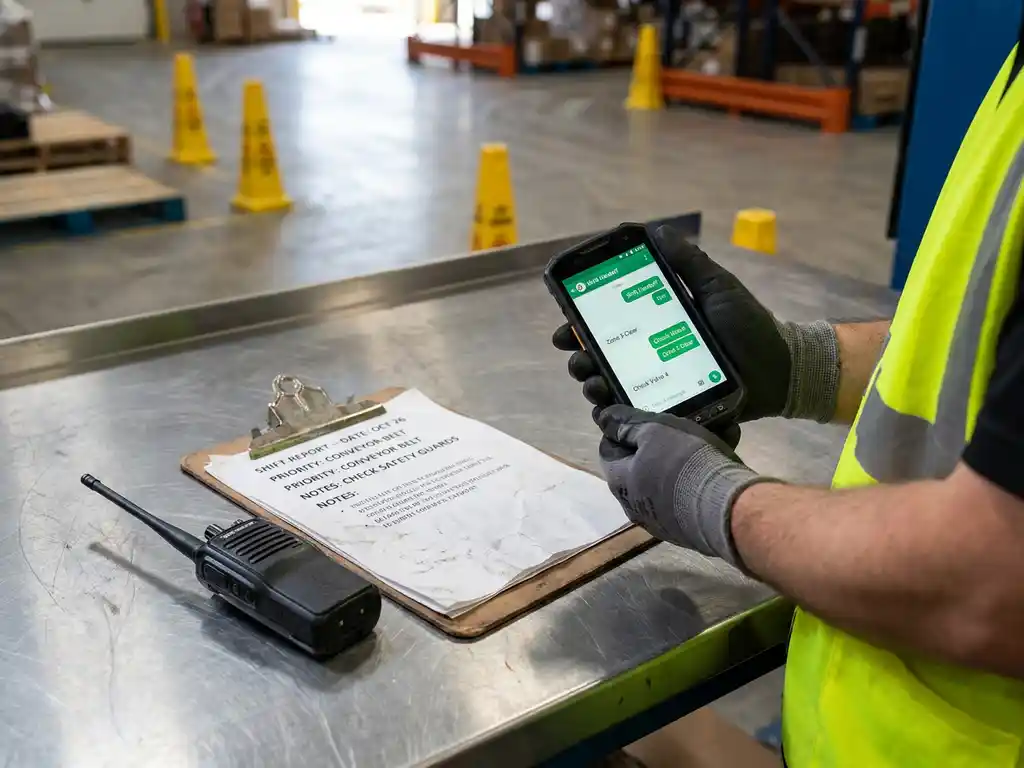
The best change communication tools for frontline teams are mobile first channels that reach people during shifts, require minimal logins, and support two way feedback. In practice, that usually means a mix of team huddles, SMS or WhatsApp style messaging, digital signage, and short manager toolkits that keep messages consistent.
Frontline change updates succeed when the channel matches the reality of the job: limited desk time, shared devices, noisy environments, and high operational pressure. The most effective internal communication strategy also pairs the tool with clear ownership, simple language, and repetition across moments that matter.
Below are the key questions leaders ask when building a communication strategy for shift based change, plus practical ways to improve employee engagement and make workplace transformation stick.
What are change communication tools for frontline teams?
Change communication tools for frontline teams are the channels, formats, and routines used to deliver change updates to employees who are not desk based and often work in shifts. The best tools make messages easy to access, quick to understand, and simple to act on, while also enabling feedback to support leading through change.
Think of these tools as a system, not a single app. For frontline environments, the system typically includes:
- Push channels that reach people fast, like SMS, messaging apps, or app notifications
- In person touchpoints like shift huddles and pre shift briefings that allow questions
- Visual reminders like posters and digital signage for high traffic areas
- Manager enablement such as talking points, FAQs, and escalation paths
- Feedback loops like pulse questions, quick polls, or structured check ins
Used well, change communication tools support a stronger internal communication strategy, reduce confusion during cultural change, and protect team culture when processes, roles, or priorities shift.
Which communication channels work best for frontline change updates?
The best communication channels for frontline change updates are the ones employees can access in seconds during real work, without hunting through email. Most organizations get the best results by combining short in person huddles with mobile messaging and simple visual cues, then reinforcing the same message through managers for consistency.
Here are the most reliable channel options, and when they work best:
- Shift huddles and stand ups for urgent updates, safety or process changes, and quick Q and A
- SMS or messaging apps for time sensitive alerts, schedule related changes, and reminders that need high open rates
- Employee apps for searchable updates, micro learning, and two way feedback at scale
- Digital signage for repeated reinforcement in break rooms, entrances, and locker areas
- Printed one pagers for regulated environments or teams with limited device access
- Manager toolkits for consistent talking points, escalation guidance, and local examples
A practical rule for creative change management is to use one primary channel for the official update and two reinforcement channels for repetition. That repetition is what turns a message into behavior, especially during workplace transformation.
How do you choose the right change communication tool for shift-based teams?
Choose the right change communication tool for shift based teams by matching the tool to the work reality: when people can read, where they are, what devices they have, and how quickly they must act. The right choice also supports feedback and manager consistency, so the same change story lands across every shift and location.
Use this selection checklist to avoid common rollout failures:
- Access: Can employees open it without a company laptop, long passwords, or multiple logins?
- Timing: Does it reach people before, during, or after shifts when decisions happen?
- Environment: Will it work in noisy, hands on settings where attention is limited?
- Clarity: Can the message be understood in under 30 seconds, with a clear next step?
- Two way: Can employees ask questions or flag issues without friction?
- Manager load: Does it reduce the burden on supervisors with ready to use scripts and FAQs?
- Measurement: Can you track reach, understanding, and adoption, not just distribution?
If you are also investing in change management training or management training, align the tool with the behaviors you are teaching. For example, if leaders are learning coaching skills, pick a channel that makes it easy to capture questions and respond quickly, rather than a one way broadcast only approach.
How can you make change messages stick with frontline employees?
Make change messages stick with frontline employees by turning abstract updates into concrete actions, repeating them across multiple moments, and using stories people recognize from daily work. The most effective employee communication training focuses on clarity, relevance, and dialogue, because understanding improves when teams can react, ask, and practice.
These tactics consistently improve employee engagement and reduce change fatigue:
- Lead with the “what changes for me” in the first sentence, then explain the why
- Use one message, three reinforcements across huddles, mobile, and visual reminders
- Translate strategy into behaviors using examples from real shifts and real customers
- Build a simple narrative with beginning, tension, and resolution to support storytelling in change
- Invite micro feedback with one question, not a long survey, and respond visibly
- Equip supervisors with a short script, top objections, and a clear escalation route
- Use business friendly humor carefully to lower defensiveness and make recall easier, without minimizing impact
When cultural change is part of the shift, connect the update to company culture and team culture building. People adopt new habits faster when the change feels like a natural extension of “how we do things here,” not a random new rule.
How Boom for Business helps with frontline change communication?
We help frontline change communication work by combining a clear communication strategy with practical, human delivery that teams actually remember. Our approach uses storytelling in change, business friendly humor, and interactive practice so managers and frontline teams can understand the change, talk about it confidently, and act on it consistently across shifts.
- Change ready leaders: management training and change management training that equips supervisors to lead through change with clarity and empathy
- Message that lands: employee communication training focused on simple language, strong structure, and real frontline examples
- Culture support: company culture workshop formats that strengthen team culture, culture building, and alignment during workplace transformation
- Engaging delivery: creative change management sessions that use improvisation and humor in business to increase attention and recall
If you want frontline updates to cut through noise and drive adoption, explore our workshops or contact us via Boom For Business to discuss a cultural change program or culture transformation workshop tailored to your teams.
Frequently Asked Questions
How do you measure whether frontline change communication is actually working?
Track a mix of reach, understanding, and behavior. Use simple metrics like message open rates (for SMS/app), huddle attendance, and signage placement checks, then add two quick “understanding” pulse questions (e.g., “What’s changing today?”). Finally, confirm adoption with operational indicators tied to the change (errors, rework, safety incidents, compliance checks). Review weekly and adjust the message or channel when understanding lags.
What should you do if employees don’t have company phones or reliable device access?
Design for shared access: use shift huddles as the primary “official” moment, reinforce with digital signage and printed one-pagers in high-traffic areas, and provide a QR code that works on personal phones for optional details. If you use SMS/WhatsApp, make it opt-in and keep messages short with a clear action. Always include a non-digital fallback so no one is excluded.
How often should you repeat change updates without causing message fatigue?
Repeat the same core message on a predictable cadence, not constantly. A practical approach is: one official update, two reinforcements within 72 hours, then weekly reminders only if there’s a new action or deadline. Keep each repeat focused on one behavior (“Do X every shift”) and rotate the format (huddle script, short text, visual cue) so it feels helpful rather than noisy.
How do you handle questions and rumors across multiple shifts and locations?
Create a single source of truth and a fast escalation loop. Maintain a living FAQ that managers can access, set a response SLA (e.g., “We’ll answer within 24 hours”), and publish “What we heard / What’s true” updates weekly. In huddles, ask one consistent question (“What’s unclear right now?”) and capture themes so you can address the same rumor everywhere at once.
What’s the best way to support managers so messages stay consistent?
Give managers a lightweight toolkit: a 60-second talk track, three likely objections with suggested responses, one local example, and a clear “If you hear X, do Y” escalation path. Run a 10-minute manager prep before the first rollout and provide a quick refresher before each major milestone. Consistency improves when managers don’t have to improvise under pressure.
How do you communicate change in multilingual or low-literacy environments?
Use plain language, visuals, and demonstration. Translate the “what changes for me” line and the action steps, not just the full memo. Pair text with icons, photos, or short videos, and use teach-back in huddles (“Show me how you’ll do it”). If possible, appoint bilingual champions per shift to collect questions and confirm understanding.
What should you do in the first week of a change rollout to increase adoption?
Focus on clarity, practice, and fast feedback. Day 1: deliver the core message in huddles with a single action. Days 2–3: reinforce via mobile/signage and observe the behavior on the floor. Days 4–5: run a quick pulse question, publish answers to top issues, and recognize teams doing it right. Fix friction points immediately—early wins reduce resistance and set the norm.