
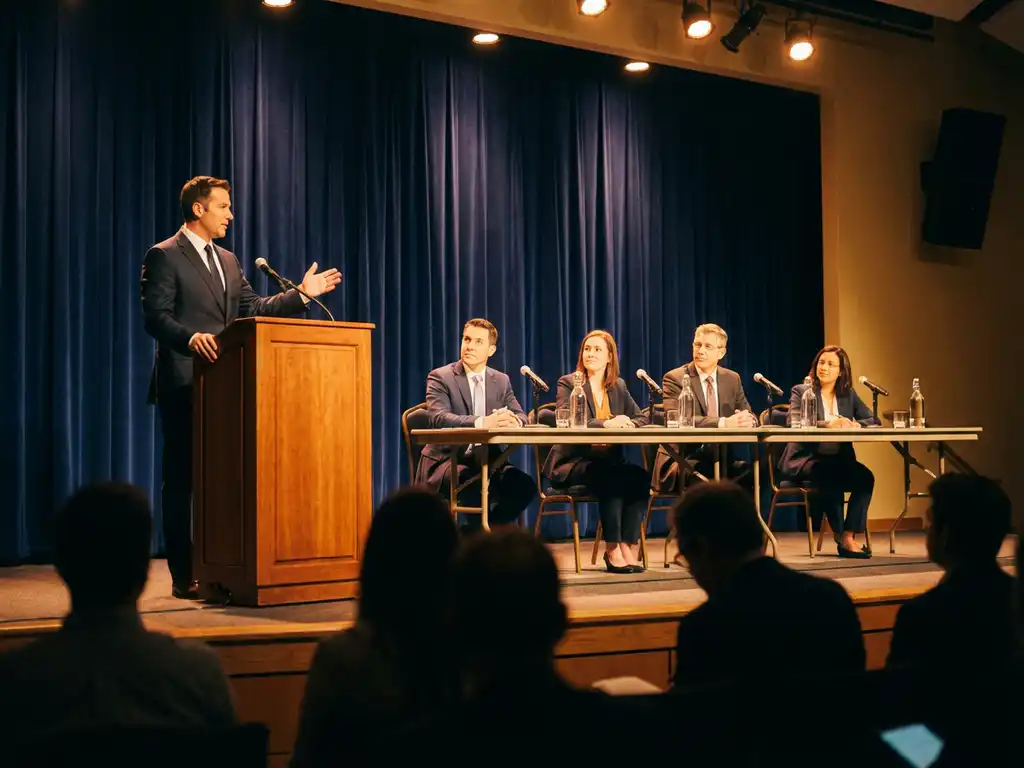
A panel discussion can be one of the most powerful formats in a corporate event lineup. Done well, it sparks genuine conversation, surfaces diverse perspectives, and leaves audiences thinking long after the event ends. But the difference between a panel that energizes a room and one that drains it often comes down to a single factor: event moderation. The moderator is the invisible architecture holding everything together, and understanding their role is essential for anyone planning a corporate panel discussion.
Whether you are organizing a leadership summit, a conference breakout session, or an internal town hall, this guide answers the most important questions about panel moderation so you can make smarter decisions and create more memorable events.
What is event moderation in a panel discussion?
Event moderation in a panel discussion is the practice of guiding a structured conversation among multiple speakers to ensure it stays focused, balanced, and engaging for the audience. The moderator controls the flow of dialogue, manages time, draws out insights from panelists, and connects the discussion to the audience’s interests and needs.
Think of a panel moderator as a conductor rather than a performer. The panelists bring the expertise and opinions, but the moderator shapes the experience. Without that structure, even the most knowledgeable panelists can talk past each other, drift off topic, or leave the audience feeling disconnected from the conversation.
Good event moderation combines preparation, active listening, and real-time adaptability. A skilled moderator reads the room, adjusts the pace when the energy dips, and knows when to push a panelist further—and when to move on. It is a craft that requires both interpersonal intelligence and a clear understanding of the event’s goals.
Why does a panel discussion fail without a strong moderator?
A panel discussion fails without a strong moderator because no one is managing the dynamics that naturally arise when multiple voices share a stage. Without moderation, dominant speakers take over, quieter panelists go unheard, conversations drift off topic, and audiences lose the thread of the discussion entirely.
Common failure patterns in unmoderated or poorly moderated panels include:
- One panelist monopolizing the conversation while others sit silently
- Vague or overly long answers that never reach a clear point
- Questions that are too soft, leaving no room for genuine debate
- Dead air or awkward transitions between topics
- An audience that feels like a passive observer rather than part of the experience
Corporate audiences, in particular, are accustomed to high-quality communication and have a low tolerance for wasted time. When a panel meanders without direction, it signals poor planning and can undermine the credibility of the entire event. A strong moderator prevents all of this by maintaining both the structure and the energy of the discussion from start to finish.
What does an event moderator actually do during a panel?
During a panel discussion, an event moderator opens the session, introduces the panelists, poses questions, manages speaking time, facilitates audience interaction, and closes the discussion with a clear takeaway. Their job is to keep the conversation purposeful, balanced, and engaging throughout the entire session.
Before the panel begins
Effective moderation starts long before the first question is asked. A good moderator researches each panelist, understands the event’s objectives, and prepares a question framework that allows for both structure and spontaneity. They brief panelists in advance so no one feels blindsided, and they align with the event organizer on tone, format, and timing.
During the live discussion
In the room, the moderator is constantly making micro-decisions. They track time, read body language, follow the thread of the conversation, and decide when to intervene, redirect, or deepen a topic. They ask follow-up questions that push beyond surface-level answers and draw in panelists who have not yet spoken. When audience questions are part of the format, the moderator filters and frames them to keep the discussion productive.
Closing the panel
A strong moderator brings the discussion to a clear and satisfying close. Rather than letting the session fizzle out, they synthesize the key themes, offer a memorable closing frame, and thank the panelists in a way that reinforces the value of what was shared. This final moment shapes how the audience remembers the entire discussion.
What’s the difference between a moderator, a host, and a facilitator?
A moderator guides a structured panel conversation among speakers. A host manages the broader event experience, welcoming audiences and introducing segments. A facilitator leads interactive group processes, often in workshops or team sessions. The roles overlap but serve distinct purposes depending on the format and goals of the event.
Here is how the three roles differ in practice:
- Moderator: Focused on managing dialogue among panelists. Their primary job is to draw out insight, maintain balance, and keep the conversation on track.
- Host: Responsible for the overall event flow and audience experience. They set the tone, introduce speakers, and bridge different segments of a program.
- Facilitator: Leads participatory processes where the goal is group input or collaborative output. Common in workshops, strategy sessions, or team-building activities.
In corporate events, these roles are sometimes combined. A skilled event professional can moderate a panel, then transition into hosting a broader session or facilitating an audience exercise. Understanding the distinction helps event planners assign the right person to the right role and set clear expectations for each part of the program.
How do you choose the right moderator for a corporate panel?
The right moderator for a corporate panel combines subject-matter familiarity with strong interpersonal skills, quick thinking, and genuine audience awareness. They do not need to be the most knowledgeable person in the room, but they must be credible, prepared, and capable of holding the room’s attention throughout the session.
When evaluating potential moderators, consider the following criteria:
- Relevance: Do they understand the industry or topic well enough to ask intelligent follow-up questions?
- Communication style: Can they adapt their tone to match the event’s culture, whether formal, conversational, or energetic?
- Experience under pressure: Have they managed difficult panelists, unexpected tangents, or technical disruptions without losing composure?
- Audience connection: Do they naturally engage the room, or do they stay locked in conversation with the panelists?
- Preparation ethic: Are they willing to invest time in understanding the event’s goals and the panelists’ backgrounds before the day?
Avoid choosing a moderator purely based on seniority or status. A well-known name who has never moderated a live panel can easily lose control of the room. Practical experience and genuine communication skill matter far more than title or reputation.
What makes a panel discussion truly engaging for the audience?
A truly engaging panel discussion creates a sense of live, unscripted conversation in which the audience feels like active participants rather than passive observers. This requires real disagreement or contrast among panelists, questions that go beyond the obvious, and a moderator who keeps the energy dynamic and the pacing tight.
Several elements consistently elevate a panel from informative to genuinely memorable:
- Diverse perspectives: Panels where all speakers broadly agree rarely generate insight. Constructive tension between viewpoints keeps audiences alert and engaged.
- Specific, concrete examples: Abstract discussion quickly loses an audience. Moderators who push panelists toward real stories and concrete examples keep the conversation grounded and relatable.
- Audience involvement: Whether through live questions, polling, or structured interaction, giving the audience a role in the discussion dramatically increases engagement and retention.
- Pacing and energy management: A skilled moderator knows when to slow down for a powerful moment and when to inject energy to prevent the session from flattening.
- A clear narrative arc: The best panels feel like they build toward something. A strong opening question, a progression through complexity, and a satisfying close all contribute to an experience that audiences remember.
Humor also plays a surprisingly important role. Light, well-placed humor from the moderator or panelists lowers the psychological distance between the stage and the audience, making people more receptive to the ideas being shared. It does not mean turning a panel into a comedy show, but it does mean that warmth and wit are genuine assets in any panel discussion format.
How Boom For Business Helps You Run Panels That Actually Work
We know that a great panel discussion does not happen by accident. It takes the right format, the right questions, and, above all, the right moderator. At Boom For Business, we bring over 30 years of performance and communication expertise to corporate events, combining professional moderation with the energy, humor, and audience awareness that transform a good panel into an unforgettable experience.
Here is what we offer for organizations looking to elevate their panel discussions and corporate events:
- Professional event moderation: Our moderators are trained communicators with deep experience in live corporate environments. They prepare thoroughly, adapt in real time, and know how to bring out the best in every panelist.
- Custom panel formats: We work with you to design a panel structure that fits your event goals, whether you need a high-energy keynote format, an intimate fireside chat, or a fully interactive, audience-led session.
- Masterclass Workshops: Our Masterclass Workshops help your internal moderators and presenters develop the communication skills, storytelling confidence, and improvisational thinking they need to run panels with impact.
- Team building integration: We connect panel discussions with broader team-building experiences that reinforce the themes and conversations from your event.
- Culture and change support: If your panel is part of a larger change or communication initiative, our positive culture programs help embed the messages where they matter most.
If you are ready to run panel discussions that your audience will actually remember, we would love to help you make it happen. Reach out to Boom For Business and let us design an event experience that combines professionalism, energy, and genuine impact.
Frequently Asked Questions
How far in advance should a moderator start preparing for a corporate panel discussion?
Ideally, a moderator should begin preparation at least two to three weeks before the event. This gives them enough time to research each panelist’s background, align with the event organizer on goals and format, develop a strong question framework, and conduct a pre-panel briefing with the speakers. Last-minute preparation is one of the most common causes of flat, unfocused panels — the more groundwork laid in advance, the more confidently the moderator can adapt in the moment.
What should I do if a panelist dominates the conversation and won't stop talking?
This is one of the most common challenges in live panel moderation, and a skilled moderator handles it with both firmness and grace. Practical techniques include using a verbal cue such as u0022That’s a great point — I want to make sure we get [another panelist’s name] perspective on this,u0022 or simply stepping in with a confident u0022Let me pause you there and open this up to the group.u0022 The key is to intervene early and consistently rather than letting the imbalance build — the longer a dominant speaker goes unchecked, the harder it becomes to redistribute the conversation.
How many panelists is the right number for a corporate panel discussion?
Three to four panelists is generally the sweet spot for most corporate panel formats. This number allows for genuine diversity of perspective without making it difficult for the moderator to manage speaking time or for the audience to track who is saying what. Panels with five or more speakers often result in some voices being heard far less than others, while panels with only two speakers can feel more like a debate than a discussion. If your topic genuinely requires more voices, consider breaking the session into themed segments with rotating panelists.
Is it a mistake to let panelists see the questions in advance?
Sharing a general question framework in advance is actually best practice — it helps panelists prepare thoughtful answers and reduces the risk of vague or unprepared responses. However, there is an important distinction between sharing the themes and sharing the exact wording of every question. Giving panelists the broad topics in advance while keeping some follow-up questions flexible preserves the spontaneity and energy that makes a panel feel like a live conversation rather than a scripted performance.
How should audience Qu0026A be structured to avoid derailing the panel?
The most effective approach is to have the moderator filter and reframe audience questions before directing them to panelists. This means collecting questions in advance through a submission tool, using a live polling platform, or having audience members write questions on cards — rather than opening the floor to open-ended microphone passes, which can introduce off-topic or overly long questions. The moderator’s job is to select questions that add genuine value to the discussion, combine similar questions, and rephrase unclear ones so the conversation stays focused and productive.
Can someone from within our organization moderate a panel, or do we need an external professional?
An internal moderator can absolutely work well, particularly for town halls or sessions where familiarity with the company culture is an asset. However, internal moderators often face two specific challenges: they may find it difficult to push back on senior panelists, and they can struggle to stay objective when they have a stake in the topic being discussed. For high-visibility events, external professional moderators bring neutrality, polish, and live experience that consistently elevates the quality of the discussion. If you are investing in an internal moderator, structured communication training — such as a Masterclass Workshop — is strongly recommended before putting them on stage.
What are the biggest mistakes event organizers make when planning a panel discussion?
The most common mistakes include choosing panelists who all share the same viewpoint (which eliminates the tension that makes panels interesting), selecting a moderator based on seniority rather than communication skill, and failing to define a clear narrative arc for the session. Another frequent misstep is treating the panel as a standalone element rather than connecting it to the broader event theme or desired audience takeaway. The best panels are designed backwards — starting with the one thing you want the audience to walk away thinking or feeling, and then building the format, questions, and panelist mix to deliver exactly that.